
Trajectory Planning & Motion Generation · Lesson 13
Time Scaling & Motion Duration
Est. 45–60 min
Why
Why this lesson matters
*Modern Robotics* splits every trajectory into a path θ(s), with s from 0 to 1, and a time scaling s(t) that says where on the path you are at time t. Together they give θ(s(t)). In this lesson you will use that split to answer a very practical question: how long should this move take? Too short breaks limits; too long wastes cycle time.
By the end of this lesson you will be able to: explain path vs time scaling; predict how peak speed, acceleration and jerk change when you stretch or squeeze T; compute the shortest legal T from one trial run; and pick T with a knob on the servo bench while the sketch refuses illegal choices.

Concept
Shape and timing are separate — and T scales everything
Path and time scaling
| Part | Answers | Example |
|---|---|---|
| Path θ(s), s ∈ [0, 1] | Where does the robot go? | A Cartesian line with IK at each s (Lesson 9) |
| Time scaling s(t), t ∈ [0, T] | When is it at each point? | Quintic s = 10u³ − 15u⁴ + 6u⁵ with u = t/T |
By the chain rule, joint velocity is θ̇ = (dθ/ds)·ṡ (MR eq. 9.1). The path decides dθ/ds; the time scaling decides ṡ. So you can change the timing without touching the path.
Stretching T: the 1, 2, 3 rule
If you keep the shape of s(t) (for example the quintic) and only change T, then u = t/T and every derivative picks up another 1/T:
| Quantity | Scales as | Halve T → |
|---|---|---|
| Peak speed | 1/T | × 2 |
| Peak acceleration | 1/T² | × 4 |
| Peak jerk | 1/T³ | × 8 |
Shortest legal T from one trial
Trial
Play the path once (on paper) with any T₀ and measure the peaks v₀, a₀, j₀ over all joints.
Speed
T_v = T₀ · v₀ / v_max
Acceleration
T_a = T₀ · √(a₀ / a_max)
Jerk
T_j = T₀ · ∛(j₀ / j_max)
Choose
T = the largest of the three (plus a small safety margin).

Visual
Visualise it: same path, different durations
The path is fixed; only the duration changes. Shorter T means steeper joint curves — higher speed, much higher acceleration.
Interactive · Cartesian trajectory planner (2R educational · Stage 8 IK)


Interpolate a straight line in task space, then call Stage 8 ik2R each sample. Labeled simplified — not industrial 6DOF.
- EE (x,y)
- 100.0, 40.0
- Joints (°)
- -18.4, 96.4
- Path health (samples)
- unreachable=0 · joint-limit≈0 · singular=0
Code lab
Code lab: one trial, the shortest legal T
time_scaling.py plays the Lesson 9 line (14, 2) → (2, 14) on the 10 cm + 8 cm arm with a quintic s(t) at different T, measures peak joint speed, acceleration and jerk, and then computes the shortest legal T from a single trial. Run python3 time_scaling.py.
# time_scaling.py - Stage 9 Lesson 13: time scaling and motion duration
# The same Cartesian line (Lesson 9) is played with different durations T.
# Peak joint speed scales as 1/T, acceleration as 1/T^2, jerk as 1/T^3, so the
# shortest legal T can be computed from ONE trial run. Pure Python.
import math

L1, L2 = 10.0, 8.0
A, B = (14.0, 2.0), (2.0, 14.0)
VMAX, AMAX, JMAX = 120.0, 300.0, 3000.0      # deg/s, deg/s^2, deg/s^3 (example limits)

def ik(x, y):                                  # elbow-up 2R IK (Stage 8), degrees
    c2 = (x*x + y*y - L1*L1 - L2*L2) / (2*L1*L2)
    t2 = math.acos(max(-1.0, min(1.0, c2)))
    t1 = math.atan2(y, x) - math.atan2(L2*math.sin(t2), L1 + L2*math.cos(t2))
    return math.degrees(t1), math.degrees(t2)

def quintic(u):
    return 10*u**3 - 15*u**4 + 6*u**5

def peaks(T, n=2000):
    """Peak |speed|, |acc|, |jerk| over both joints, by finite differences."""
    h = T / n
    q = []
    for k in range(n + 1):
        s = quintic(k / n)
        q.append(ik(A[0] + s*(B[0] - A[0]), A[1] + s*(B[1] - A[1])))
    pv = pa = pj = 0.0
    for j in range(2):
        x = [p[j] for p in q]
        v = [(x[i+1] - x[i]) / h for i in range(n)]
        a = [(v[i+1] - v[i]) / h for i in range(n - 1)]
        jk = [(a[i+1] - a[i]) / h for i in range(n - 2)]
        pv, pa, pj = max(pv, max(map(abs, v))), max(pa, max(map(abs, a))), max(pj, max(map(abs, jk)))
    return pv, pa, pj

print("Part 1 - same path, different durations (quintic timing)")
print("     T(s)   peak speed  peak acc   peak jerk")
for T in (0.5, 1.0, 2.0, 4.0):
    pv, pa, pj = peaks(T)
    print(f"   {T:5.2f}   {pv:8.1f}  {pa:9.1f}  {pj:10.1f}")

print("\nPart 2 - shortest legal T from ONE trial at T0 = 2 s")
T0 = 2.0
pv, pa, pj = peaks(T0)
Tv = T0 * pv / VMAX
Ta = T0 * math.sqrt(pa / AMAX)
Tj = T0 * (pj / JMAX) ** (1/3)
Tmin = max(Tv, Ta, Tj)
print(f"  speed needs T >= {Tv:.2f} s, acceleration T >= {Ta:.2f} s, jerk T >= {Tj:.2f} s")
which = ["speed", "acceleration", "jerk"][[Tv, Ta, Tj].index(Tmin)]
print(f"  shortest legal T = {Tmin:.2f} s (limited by {which})")
pv, pa, pj = peaks(Tmin)
print(f"  check at T = {Tmin:.2f}: speed {pv:.1f} (<= {VMAX:.0f}), acc {pa:.1f} (<= {AMAX:.0f}), jerk {pj:.1f} (<= {JMAX:.0f})")

print("\nPart 3 - rule of thumb: halve T and the peaks grow")
pv1, pa1, pj1 = peaks(2.0)
pv2, pa2, pj2 = peaks(1.0)
print(f"  speed x{pv2/pv1:.2f}, acceleration x{pa2/pa1:.2f}, jerk x{pj2/pj1:.2f}")
Output (run with python3 time_scaling.py)
Part 1 - same path, different durations (quintic timing)
     T(s)   peak speed  peak acc   peak jerk
    0.50      336.0     2976.9     50577.8
    1.00      168.0      744.2      6322.2
    2.00       84.0      186.1       790.3
    4.00       42.0       46.5        98.8

Part 2 - shortest legal T from ONE trial at T0 = 2 s
  speed needs T >= 1.40 s, acceleration T >= 1.58 s, jerk T >= 1.28 s
  shortest legal T = 1.58 s (limited by acceleration)
  check at T = 1.58: speed 106.7 (<= 120), acc 300.0 (<= 300), jerk 1618.0 (<= 3000)

Part 3 - rule of thumb: halve T and the peaks grow
speed x2.00, acceleration x4.00, jerk x8.00Try it: plan a tool line, then change the duration and watch the joint curves get steeper or gentler — the path itself stays the same (simplified 2R arm).
Interactive · Cartesian trajectory planner (2R educational · Stage 8 IK)
Interpolate a straight line in task space, then call Stage 8 ik2R each sample. Labeled simplified — not industrial 6DOF.
- EE (x,y)
- 100.0, 40.0
- Joints (°)
- -18.4, 96.4
- Path health (samples)
- unreachable=0 · joint-limit≈0 · singular=0
Real world
Choosing durations in the real world
- Cycle time in factories is the sum of move durations; choosing the shortest legal T for each move saves seconds that add up to hours.
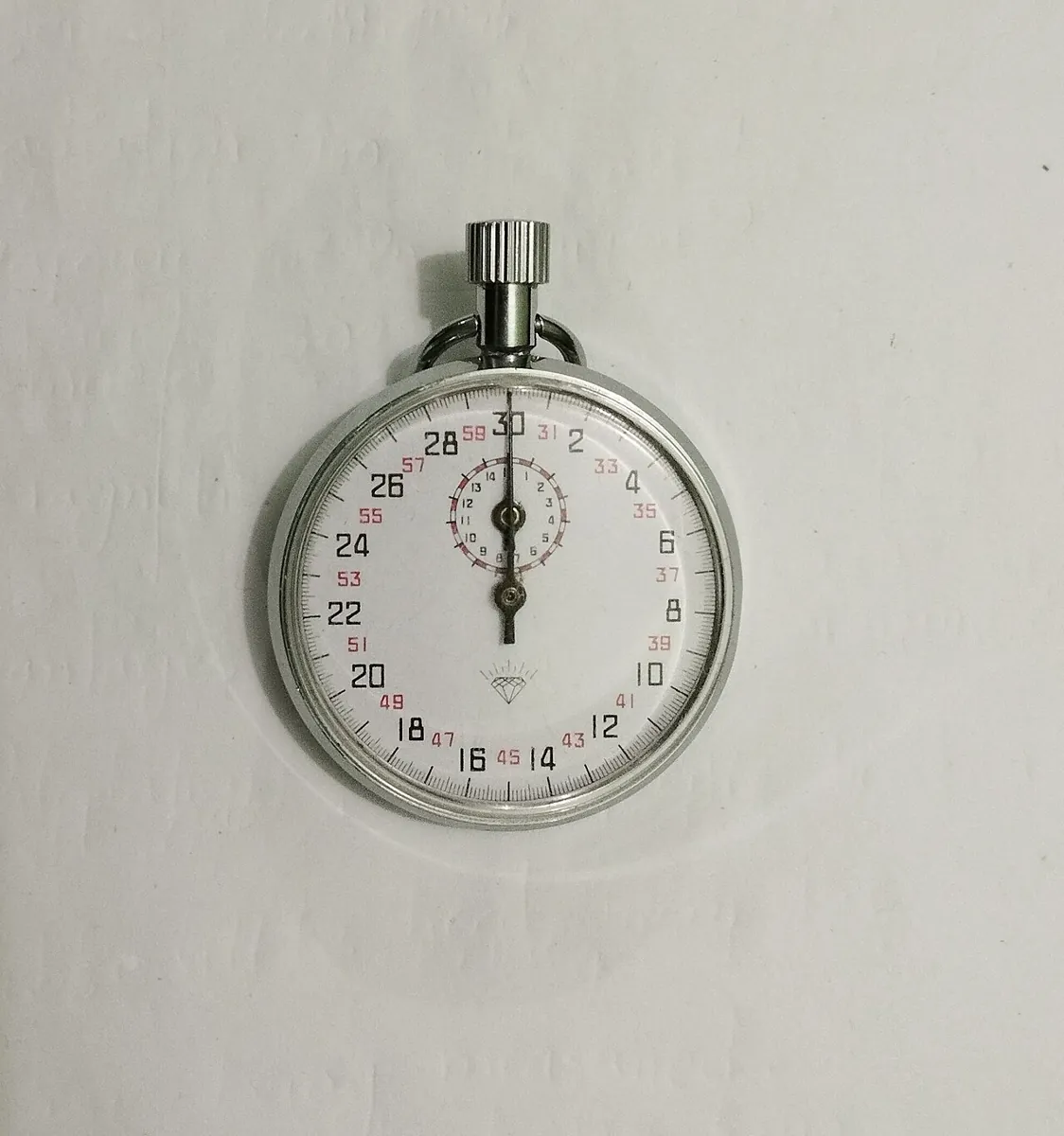
- 3D printers and CNC machines plan every move inside per-axis limits on feedrate and acceleration (Marlin M203 and M201), so the same path runs slower when the limits are lower.
- Lesson 9’s planner used a fixed T; with today’s rule it can pick T itself.
Bench build
Bench build: a duration knob with a safety check
duration_knob.ino lets a potentiometer choose T between 0.5 s and 4 s for a 120° quintic move. Before moving it predicts the peaks with the quintic formulas from Lesson 8 (15d/(8T) and 10d/(√3·T²)) and refuses if they break the limits. At start-up it prints the shortest legal T: 1.88 s for these numbers.
| From | To | Note |
|---|---|---|
| Servo signal | D9 | |
| Servo + and − | Separate 5–6 V supply, 1 A or more | Never the Arduino 5 V pin |
| Supply − | Arduino GND | Common ground |
| 10 kΩ potentiometer | Ends to 5 V and GND, wiper to A0 | Pot only — the servo stays on its own supply |
| Button | D2 ↔ GND | INPUT_PULLUP |
Read the minimum
Open the Serial Monitor (115200). Note the shortest legal T.
Too short
Turn the knob fully left (T ≈ 0.5 s) and press D2. It should refuse and not move.
Just legal
Turn until the printed T is just above the minimum and press D2. Time it.
Slow
Try T = 4 s. Compare how calm the motion looks.
Your limits
Change V_MAX and A_MAX and predict the new minimum before you upload.
// duration_knob.ino - Stage 9 Lesson 13: choose the duration T with a knob
// The knob on A0 sets T from 0.5 s to 4.0 s for a 120 deg quintic move.
// Before moving, the sketch predicts the peaks (quintic: v = 15d/(8T), a = 10d/(sqrt(3) T^2))
// and REFUSES if they break the limits. Press D2 to move 30 <-> 150 deg.
// Wiring: servo signal D9. Servo on a SEPARATE 5-6 V supply (1 A+); supply GND -> Arduino GND.
//         10k potentiometer: ends to 5 V and GND, wiper to A0. Button D2 -> GND (INPUT_PULLUP).
#include <Servo.h>

Servo joint;
const float D = 120.0;
const float V_MAX = 120.0, A_MAX = 300.0;      // deg/s, deg/s^2 (example limits)
const unsigned long DT_MS = 20;
float pos = 30;

void writeDeg(float deg) {
  deg = constrain(deg, 0, 180);
  joint.writeMicroseconds(544 + (int)(deg * (2400 - 544) / 180.0));
}

float quintic(float u) { return u * u * u * (10 - 15 * u + 6 * u * u); }

void setup() {
  Serial.begin(115200);
  pinMode(2, INPUT_PULLUP);
  joint.attach(9);
  writeDeg(pos);                                // quick move to 30 deg at power-up
  float tMin = max(15.0 * D / (8.0 * V_MAX), sqrt(10.0 * D / (sqrt(3.0) * A_MAX)));
  Serial.print(F("Shortest legal T for this move: ")); Serial.print(tMin, 2); Serial.println(F(" s"));
  Serial.println(F("Turn the knob to choose T, press D2 to move."));
}

void loop() {
  if (digitalRead(2) != LOW) return;
  float T = 0.5 + 3.5 * analogRead(A0) / 1023.0;
  float vPeak = 15.0 * D / (8.0 * T);
  float aPeak = 10.0 * D / (sqrt(3.0) * T * T);
  Serial.print(F("T = ")); Serial.print(T, 2);
  Serial.print(F(" s  peak speed ")); Serial.print(vPeak, 0);
  Serial.print(F("  peak acc ")); Serial.print(aPeak, 0);
  if (vPeak > V_MAX || aPeak > A_MAX) {
    Serial.println(F("  -> REFUSED, turn the knob to a longer T"));
  } else {
    Serial.println(F("  -> OK"));
    float start = pos, target = (pos < 90) ? 150 : 30;
    unsigned long t0 = millis();
    while (true) {
      float u = (millis() - t0) / 1000.0 / T;
      if (u > 1) u = 1;
      writeDeg(start + (target - start) * quintic(u));
      if (u >= 1) break;
      delay(DT_MS);
    }
    pos = target;
  }
  while (digitalRead(2) == LOW) delay(10);
  delay(200);
}Debugging
Debugging durations
| Symptom | Likely cause | Fix |
|---|---|---|
| Robot misses its limits after you shorten T | Only speed was checked | Check speed, acceleration and jerk |
| Move slower than computed | Real motor slower than v_max | Measure; lower v_max |
| Peaks wrong in the trial | Too few samples in finite differences | Use more samples, especially for jerk |
| Knob reading jumps | Loose wiper or noisy supply | Check wiring; average a few readings |
| Different joints finish at different times | Each joint got its own T | One T for the whole path (Lesson 14) |
Think
Think about it
Think
A move is too fast: its speed is 1.2× the limit and its acceleration is 1.5× the limit. By how much must you stretch T, and which limit decides?
Experiment
Try it in the lab
About 30 minutes with time_scaling.py and the planner; the knob build takes 15 more minutes.
Experiment
Squeeze and stretch
You will need
- `time_scaling.py` and Python 3
- Cartesian trajectory planner (in your browser)
- Optional: servo, separate 5–6 V supply, 10 kΩ potentiometer, button
Steps
- Run the program and check the 1, 2, 3 rule in Part 1 with a calculator.
- Change AMAX to 600. Which limit decides now, and what is the new shortest T?
- Change the path to the Lesson 9 arc (edit A and B or write the arc). Recompute T.
- Lower JMAX until jerk becomes the bottleneck. At what value does that happen?
- In the planner, compare a short and a long duration for the same line.
- Optional: use the knob build to find the shortest T that your servo can really follow.
Interactive · Cartesian trajectory planner (2R educational · Stage 8 IK)
Interpolate a straight line in task space, then call Stage 8 ik2R each sample. Labeled simplified — not industrial 6DOF.
- EE (x,y)
- 100.0, 40.0
- Joints (°)
- -18.4, 96.4
- Path health (samples)
- unreachable=0 · joint-limit≈0 · singular=0
The path stays the same; only the time scaling changes. Speed, acceleration and jerk scale as 1/T, 1/T² and 1/T³, so one trial gives the shortest legal T for any limits.
Knowledge check
Check your understanding
Knowledge check
1. A trajectory is…
2. Halving T (same shape) multiplies peak acceleration by…
3. Halving T multiplies peak jerk by…
4. Acceleration is 1.44× its limit. Stretch T by…
5. In the code, the shortest legal T for the line was limited by…
6. Joint velocity along a path is…
7. What does the knob sketch do if T is too short?
Mini assignment
Hands-on assignment
Mini assignment
Duration worksheet
For three moves of your arm, find the shortest legal duration from one trial each and verify it.
Deliverables
- The three paths (joint or Cartesian) and your limits.
- Trial peaks at T₀ and the three T values (speed, acceleration, jerk) for each move.
- The chosen T with a 10% safety margin and the check run at that T.
- Total cycle time for the three moves.
- Optional: measured times on the servo bench next to the planned ones.
Do this, step by step
- Run
python3 time_scaling.pyand read Part 1: the same path at different durations. - In Part 2, note the three T values (speed, acceleration, jerk) found from one trial at
T0. Which one is largest? - Change
T0to a different trial value and re-run. The final T should stay the same — check it. - Add a 10% safety margin to the chosen T and write the new peaks.
- Optional bench: run
duration_knob.ino, turn the knob to change T and watch when the sketch refuses a move that is too fast.
Stuck? Hints, one at a time
- Halve T and speed doubles, acceleration ×4, jerk ×8.
- So T_needed = T0 × (peak/limit)¹ for speed, ^(1/2) for acceleration and ^(1/3) for jerk.
- Choose the largest of the three; that is the limit that decides.
Challenges (pick by level)
- 🟢 Easy: A move has peak speed 90°/s at T = 2 s. What is it at T = 3 s?
- 🟢 Easy: Explain path vs timing with a bus route example.
- 🟡 Medium: Add a 10% safety margin option to
time_scaling.pyand print the final T. - 🟠 Hard-ish: Make the Lesson 9 planner choose T automatically with today’s rule instead of refusing for speed.
- 🔴 Hard: Use a non-uniform time scaling: slow down only near the middle of the line where the joint speeds peak, and compare total T.
- ⚫ Research: Read *Modern Robotics* §9.4 (time-optimal time scaling) and explain how it differs from scaling one fixed shape.
Next step
One T for one joint is easy. In Lesson 14 — Multi-Joint Synchronization you will make all six joints of an arm start and finish together, smoothly and inside every joint’s limits.
Look back: Lesson 12: Jerk & Smooth Motion. Next: Lesson 14: Multi-Joint Synchronization. Related: Stage 10 — ROS 2.
Sources
- Modern Robotics (Lynch & Park) — book home page and free PDF — §9.1–9.2: path θ(s) with s ∈ [0, 1], time scaling s(t) on [0, T], trajectory θ(s(t)), chain rule θ̇ = (dθ/ds)ṡ (eq. 9.1); §9.2.2 time scaling a straight-line path; §9.4 time-optimal time scaling.
- Modern Robotics video — 9.1 and 9.2 Point-to-Point Trajectories — companion lecture.
- Marlin firmware — M201 Set Print Max Acceleration and M203 Set Max Feedrate — per-axis limits a motion planner must respect.
- Wikipedia — Jerk (physics) — jerk as the rate of change of acceleration.
- Arduino — Servo library —
writeMicroseconds()for the timed move. - Photos: Wikimedia Commons (credits under each image).
Self-attested for now — keep artifacts in your lab notebook.
Complete
Today's goal
0 of 1 done today
Mark this lesson complete when you have worked the experiment, knowledge check, and assignment (even roughly).