
Trajectory Planning & Motion Generation · Lesson 11
Velocity & Acceleration Constraints
Est. 50–70 min
Why
Why this lesson matters
Until now you chose the move time T yourself and checked the speed afterwards. In real robots it is the other way round: the limits are given — maximum velocity and maximum acceleration for each joint — and the planner finds the fastest motion that respects them. This lesson shows how: the trapezoidal velocity profile, the triangle case for short moves, and how several joints share one time.
By the end of this lesson you will be able to: compute the shortest time for a rest-to-rest move with v_max and a_max; tell when the profile is a trapezoid and when it is a triangle; find the shortest legal T for cubic and quintic moves; synchronise several joints so the slowest one sets the time; and run a limited move on a servo.
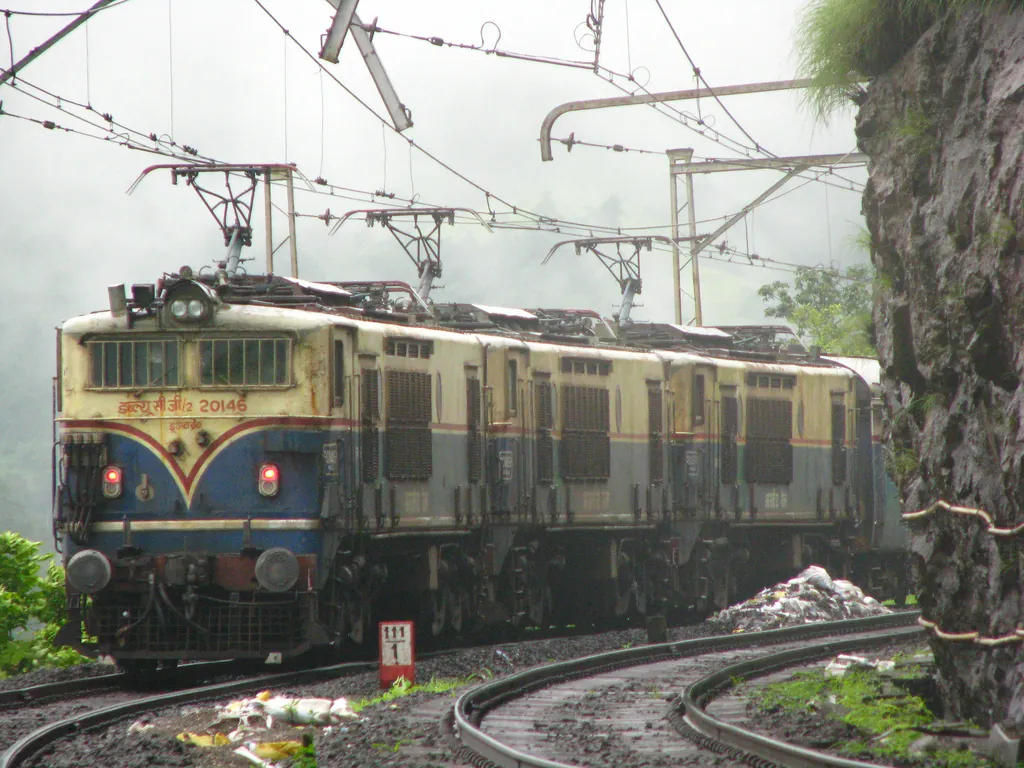
Concept
Limits, the trapezoid and the shortest legal time
The two limits
| Limit | Symbol | Comes from | If you break it |
|---|---|---|---|
| Velocity | v_max (°/s) | Motor speed, gearbox, safety rules | Motor cannot keep up; position lags |
| Acceleration | a_max (°/s²) | Motor torque ÷ inertia, current limit | Motor saturates, overshoots, gears and frame shake |
The trapezoid: speed up, cruise, slow down
The fastest rest-to-rest move with these two limits accelerates at a_max until it reaches v_max, cruises, then decelerates at a_max. The velocity graph is a trapezoid, and position is parabola + straight line + parabola. *Modern Robotics* (§9.2.2.2) notes that, with known joint velocity and acceleration limits, the trapezoid using the largest allowed v and a is the fastest straight-line motion possible.
| Case | Test | Time T | Peak speed |
|---|---|---|---|
| Trapezoid | d ≥ v_max² / a_max | T = d / v_max + v_max / a_max | v_max |
| Triangle (“bang-bang”) | d < v_max² / a_max | T = 2·√(d / a_max) | √(a_max·d) — below v_max |
Cubic and quintic under limits
Smooth polynomials are slower for the same limits, because their peaks are higher than their averages. From Lessons 7–8: a cubic’s peak speed is 1.5·d/T and peak acceleration 6·d/T²; a quintic’s are 15·d/(8T) and 10·d/(√3·T²). Set each peak ≤ its limit and take the larger T. The price of smoothness is time — Part 1 of the code shows how much.
Many joints, one time
For a straight line in joint space, all joints share one path variable s. Joint i moves d_i, so its speed is d_i·ṡ and its acceleration d_i·s̈. Choose the path limits as v = min(v_lim,i / |d_i|) and a = min(a_lim,i / |d_i|) (*Modern Robotics* eq. 9.14–9.15). The joint with the biggest move compared to its limits sets the time; the others move slower and arrive together.
Visual
Visualise it: profiles under limits
Same move, different profiles: the trapezoid reaches the target soonest for given limits; cubic and quintic are smoother but need more time.
Interactive · Motion profile comparator


Overlay linear, cubic, and quintic rest-to-rest profiles. Linear has velocity steps (harsh); cubic zeros velocity; quintic also zeros acceleration — lowest jerk among the three.
Position q(t)
Velocity q̇(t)
Acceleration q̈(t)
Jerk q⃛(t)
| Profile | peak |q̇| | peak |q̈| | peak |jerk| |
|---|---|---|---|
| Linear | 36.0 | 0.0 | ∞ (edge) |
| Cubic | 54.0 | 86.4 | 69.1 |
| Quintic | 67.5 | 83.1 | 345.6 |
Educational 1-DOF overlays — not full multi-DOF dynamics. Linear jerk shown as edge impulse in table.
Code lab
Code lab: shortest legal times
limits.py computes the trapezoid or triangle for several move sizes, the shortest legal cubic and quintic times for the same limits, and a three-joint synchronised move. Run python3 limits.py.
# limits.py - Stage 9 Lesson 11: velocity and acceleration constraints
# Shortest-time trapezoid (or triangle) for given limits, and the shortest legal
# time for cubic and quintic moves. Pure Python.
import math

def trapezoid(d, vmax, amax):
    """Rest-to-rest move of distance d with |v| <= vmax, |a| <= amax. Returns (T, peak v, shape)."""
    d = abs(d)
    if d >= vmax**2 / amax:                  # long enough to reach vmax
        return d / vmax + vmax / amax, vmax, "trapezoid"
    vpeak = math.sqrt(amax * d)              # never reaches vmax: triangle (bang-bang)
    return 2 * math.sqrt(d / amax), vpeak, "triangle"

def min_T_cubic(d, vmax, amax):
    return max(1.5 * d / vmax, math.sqrt(6 * d / amax))

def min_T_quintic(d, vmax, amax):
    return max(15 * d / (8 * vmax), math.sqrt(10 * d / (math.sqrt(3) * amax)))

VMAX, AMAX = 120.0, 300.0                    # deg/s and deg/s^2 (example servo-arm limits)
print(f"Part 1 - one joint, vmax {VMAX:.0f} deg/s, amax {AMAX:.0f} deg/s^2 (switch distance v^2/a = {VMAX**2/AMAX:.0f} deg)")
print("   move   shape       T(s)  peak v   cubic T  quintic T")
for d in (10, 30, 48, 90, 150):
    T, vp, shape = trapezoid(d, VMAX, AMAX)
    print(f"  {d:4d}   {shape:9s}  {T:5.2f}  {vp:6.1f}    {min_T_cubic(d, VMAX, AMAX):5.2f}     {min_T_quintic(d, VMAX, AMAX):5.2f}")

print("\nPart 2 - three joints, one straight joint-space line, all start and stop together")
moves = [90.0, -40.0, 20.0]                  # degrees each joint must move
vlim = [120.0, 120.0, 200.0]                 # per-joint limits
alim = [300.0, 300.0, 600.0]
# Modern Robotics eq. 9.14-9.15: |d_i| * v <= vlim_i and |d_i| * a <= alim_i, for the path speed v and accel a in s
v = min(vl / abs(d) for d, vl in zip(moves, vlim))
a = min(al / abs(d) for d, al in zip(moves, alim))
T, _, shape = trapezoid(1.0, v, a)
print(f"  path limits: v = {v:.3f} 1/s, a = {a:.3f} 1/s^2 -> {shape}, T = {T:.2f} s")
for i, (d, vl, al) in enumerate(zip(moves, vlim, alim), 1):
    Ti, _, _ = trapezoid(d, vl, al)
    print(f"  joint {i}: move {d:6.1f} deg, peak {abs(d)*min(v, math.sqrt(a)):6.1f} deg/s (limit {vl:.0f}), alone it would need {Ti:.2f} s")

print("\nPart 3 - the slowest joint sets the time")
print(f"  joint 1 alone needs {trapezoid(90, 120, 300)[0]:.2f} s; the others slow down to finish with it.")
Output (run with python3 limits.py)
Part 1 - one joint, vmax 120 deg/s, amax 300 deg/s^2 (switch distance v^2/a = 48 deg)
   move   shape       T(s)  peak v   cubic T  quintic T
    10   triangle    0.37    54.8     0.45      0.44
    30   triangle    0.63    94.9     0.77      0.76
    48   trapezoid   0.80   120.0     0.98      0.96
    90   trapezoid   1.15   120.0     1.34      1.41
   150   trapezoid   1.65   120.0     1.88      2.34

Part 2 - three joints, one straight joint-space line, all start and stop together
  path limits: v = 1.333 1/s, a = 3.333 1/s^2 -> trapezoid, T = 1.15 s
  joint 1: move   90.0 deg, peak  120.0 deg/s (limit 120), alone it would need 1.15 s
  joint 2: move  -40.0 deg, peak   53.3 deg/s (limit 120), alone it would need 0.73 s
  joint 3: move   20.0 deg, peak   26.7 deg/s (limit 200), alone it would need 0.37 s

Part 3 - the slowest joint sets the time
joint 1 alone needs 1.15 s; the others slow down to finish with it.Try it: compare trapezoid, cubic and quintic profiles for the same move. Look at the peak velocity and peak acceleration of each.
Interactive · Motion profile comparator
Overlay linear, cubic, and quintic rest-to-rest profiles. Linear has velocity steps (harsh); cubic zeros velocity; quintic also zeros acceleration — lowest jerk among the three.
Position q(t)
Velocity q̇(t)
Acceleration q̈(t)
Jerk q⃛(t)
| Profile | peak |q̇| | peak |q̈| | peak |jerk| |
|---|---|---|---|
| Linear | 36.0 | 0.0 | ∞ (edge) |
| Cubic | 54.0 | 86.4 | 69.1 |
| Quintic | 67.5 | 83.1 | 345.6 |
Educational 1-DOF overlays — not full multi-DOF dynamics. Linear jerk shown as edge impulse in table.
Real world
Speed and acceleration limits in the real world
- 3D printers and CNC machines: Marlin firmware sets the maximum feedrate (M203) and maximum acceleration (M201) of each axis; every move is planned inside them.
- Lifts: the car speeds up gently, cruises and slows down — a comfortable limit on acceleration matters as much as speed.
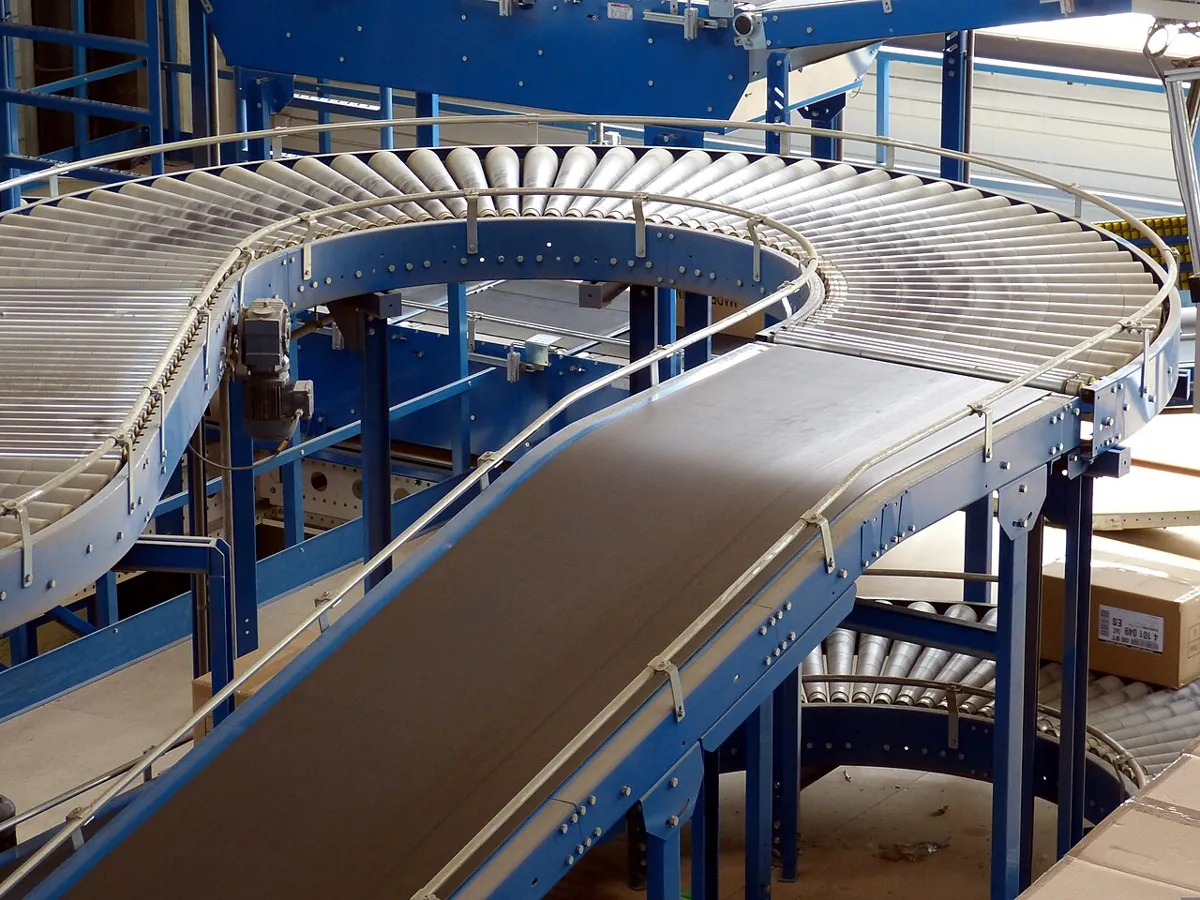
- Conveyors and pick-and-place: throughput depends on how short each move can be made inside the motor limits.
- Industrial arms: robot languages let you set speed and acceleration for moves; the controller plans the timing inside them.
Bench build
Bench build: a limited servo move
trapezoid_servo.ino moves one servo with the same limits (120°/s, 300°/s²). D2 swings it 30° ↔ 150° (a 120° move, trapezoid, T = 1.40 s). D3 makes a 20° hop (triangle, T ≈ 0.52 s, peak ≈ 77°/s). The Serial Monitor prints the plan before each move.
| From | To | Note |
|---|---|---|
| Servo signal | D9 | Any standard hobby servo |
| Servo + and − | Separate 5–6 V supply, 1 A or more | Never the Arduino 5 V pin |
| Supply − | Arduino GND | Common ground |
| Buttons | D2 ↔ GND, D3 ↔ GND | INPUT_PULLUP |
Add a load
Tape a 15 cm stick with a coin at its end to the horn. It makes inertia visible.
Long move
Press D2. Check the printed “trapezoid, T = 1.40 s” and time it with a phone stopwatch.
Short move
Press D3 a few times. Note “triangle” and how it never reaches full speed.
Push the limits
Set A_MAX to 3000. Does the stick whip and wobble at the ends? Then set V_MAX to 1000 °/s — faster than most hobby servos can turn: does the servo still keep up with the plan?
Find your servo’s limit
Increase V_MAX in steps until the stick visibly lags the plan. That is roughly your servo’s real speed limit under this load.
// trapezoid_servo.ino - Stage 9 Lesson 11: a speed- and acceleration-limited servo move
// Press D2: the servo moves between 30 and 150 deg with a trapezoid (or triangle)
// velocity profile that never exceeds V_MAX and A_MAX. Press D3: a short 20 deg hop.
// Serial Monitor (115200) prints the planned shape and time.
// Wiring: servo signal D9. Servo on a SEPARATE 5-6 V supply (1 A+); supply GND -> Arduino GND.
//         Buttons D2 -> GND and D3 -> GND (INPUT_PULLUP).
#include <Servo.h>

Servo joint;
const float V_MAX = 120.0;    // deg/s
const float A_MAX = 300.0;    // deg/s^2
const unsigned long DT_MS = 20;
float pos = 30;

void writeDeg(float deg) {
  deg = constrain(deg, 0, 180);
  joint.writeMicroseconds(544 + (int)(deg * (2400 - 544) / 180.0));
}

void move(float target) {
  float d = fabs(target - pos), dir = (target > pos) ? 1 : -1;
  if (d < 0.01) return;
  float v = V_MAX, ta, T;
  if (d >= V_MAX * V_MAX / A_MAX) { ta = V_MAX / A_MAX; T = d / V_MAX + ta; Serial.print(F("trapezoid")); }
  else { v = sqrt(A_MAX * d); ta = v / A_MAX; T = 2 * ta; Serial.print(F("triangle")); }
  Serial.print(F(", T = ")); Serial.print(T, 2); Serial.print(F(" s, peak ")); Serial.print(v, 1); Serial.println(F(" deg/s"));
  float start = pos;
  unsigned long t0 = millis();
  while (true) {
    float t = (millis() - t0) / 1000.0, s;
    if (t >= T) break;
    if (t < ta) s = 0.5 * A_MAX * t * t;                                // speeding up
    else if (t < T - ta) s = 0.5 * A_MAX * ta * ta + v * (t - ta);      // cruising
    else { float r = T - t; s = d - 0.5 * A_MAX * r * r; }              // slowing down
    writeDeg(start + dir * s);
    delay(DT_MS);
  }
  pos = target;
  writeDeg(pos);
}

void setup() {
  Serial.begin(115200);
  pinMode(2, INPUT_PULLUP);
  pinMode(3, INPUT_PULLUP);
  joint.attach(9);
  writeDeg(pos);                       // quick move to 30 deg at power-up
  Serial.println(F("D2: 30 <-> 150 deg.  D3: hop 20 deg."));
}

void loop() {
  if (digitalRead(2) == LOW) { move(pos < 90 ? 150 : 30); while (digitalRead(2) == LOW) delay(10); }
  if (digitalRead(3) == LOW) { move(pos + 20 <= 150 ? pos + 20 : pos - 20); while (digitalRead(3) == LOW) delay(10); }
}Debugging
Debugging limited motions
| Symptom | Likely cause | Fix |
|---|---|---|
| Move takes longer than planned | v_max higher than the motor can really do | Measure the real speed; lower v_max |
| Overshoot and wobble at stop | a_max too high for the load | Lower a_max, or use a smoother profile (Lesson 12) |
| Short moves feel slow | Triangle case — never reaches v_max | Normal; check d < v²/a |
| Tool path bends | Joints not synchronised | One shared s(t), slowest joint sets T |
| Jump at the start | Starting position stored wrongly | Track pos; start each plan from the real position |
Think
Think about it
Think
Doubling a_max does not halve the time of a long 150° move (try it in the code). Why not, and which limit should you raise to make long moves faster?
Experiment
Try it in the lab
About 35 minutes with limits.py and the profile comparator; the servo build takes 15 more minutes.
Experiment
Limits in numbers and on the bench
You will need
- `limits.py` and Python 3
- Motion profile comparator (in your browser)
- Optional: one servo, separate 5–6 V supply, two buttons, stick and coin, phone stopwatch
Steps
- Run the program. Check the 90° row by hand with the trapezoid formula.
- Double AMAX to 600. Which rows change most — short or long moves?
- Add a 48° row by hand: why is it exactly on the border?
- In Part 2, change joint 3’s move to 150°. Which joint is now the bottleneck, and what is T?
- In the comparator, compare peak acceleration for trapezoid, cubic and quintic.
- Optional: time the servo moves and compare with the printed T.
Interactive · Motion profile comparator
Overlay linear, cubic, and quintic rest-to-rest profiles. Linear has velocity steps (harsh); cubic zeros velocity; quintic also zeros acceleration — lowest jerk among the three.
Position q(t)
Velocity q̇(t)
Acceleration q̈(t)
Jerk q⃛(t)
| Profile | peak |q̇| | peak |q̈| | peak |jerk| |
|---|---|---|---|
| Linear | 36.0 | 0.0 | ∞ (edge) |
| Cubic | 54.0 | 86.4 | 69.1 |
| Quintic | 67.5 | 83.1 | 345.6 |
Educational 1-DOF overlays — not full multi-DOF dynamics. Linear jerk shown as edge impulse in table.
Long moves are limited by v_max, short moves by a_max. Smoother profiles cost time. In multi-joint moves the slowest joint decides, and the others are slowed to match.
Knowledge check
Check your understanding
Knowledge check
1. v_max = 120°/s, a_max = 300°/s². A 90° move takes…
2. When does the profile become a triangle?
3. For the same limits, which needs the most time?
4. In a synchronised multi-joint move, who sets the time?
5. To make a long move faster, raise…
6. A 20° move with a_max = 300°/s² (and v_max 120°/s) has peak speed…
7. Which Marlin commands set max feedrate and max acceleration?
Mini assignment
Hands-on assignment
Mini assignment
Limit sheet for your arm
Measure or choose v_max and a_max for each joint of your arm (or the 2-servo arm) and plan a three-point pick-and-place cycle in the shortest legal time.
Deliverables
- A table of v_max and a_max per joint with how you got them (datasheet or bench test).
- Joint moves for each segment and, using `limits.py`, the synchronised T for each segment.
- Total cycle time, and which joint was the bottleneck in each segment.
- One change (path or limits) that cuts the cycle by at least 10%, with numbers.
- Optional: run the cycle on the servo arm and compare measured and planned times.
Do this, step by step
- Run
python3 limits.py. From Part 1, copy the speed-up time and total time for one joint. - Check Part 1 against d ≥ v²/a: is the profile a trapezoid or a triangle?
- In Part 3, find the slowest joint and write why it sets the time for all joints.
- Change one joint’s limits to your own measured values and re-run. How much does the cycle time change?
- Optional bench: in
trapezoid_servo.ino, setV_MAXandA_MAXto your servo’s values and time the move with your phone stopwatch.
Stuck? Hints, one at a time
- If d < v²/a the joint never reaches v_max, so the profile is a triangle.
- Trapezoid total time T = d/v + v/a.
- Measure v_max on the bench: time a big move at full speed and divide angle by time; keep a 20% margin.
Challenges (pick by level)
- 🟢 Easy: v_max = 90°/s, a_max = 180°/s². Is a 30° move a trapezoid or a triangle? Find T.
- 🟢 Easy: Why do lifts limit acceleration even when they could go faster?
- 🟡 Medium: Add a jerk-free “smoothing” option to
limits.pyby computing the shortest quintic instead, and compare cycle times. - 🟠 Hard-ish: Plot position, velocity and acceleration of the trapezoid in
limits.py(matplotlib or a text plot). - 🔴 Hard: Make
trapezoid_servo.inoaccept a new target while moving (start a new plan from the current position and speed). - ⚫ Research: Read *Modern Robotics* §9.4 on time-optimal time scaling along a path and explain in your own words what “bang-bang” means there.
Next step
The trapezoid is fastest, but its acceleration jumps — which means a jerk. In Lesson 12 — Jerk & Smooth Motion you will learn why jerk shakes robots and how to limit it.
Look back: Lesson 10: Orientation Trajectories. Next: Lesson 12: Jerk & Smooth Motion. Related: Stage 4 — Electronics & Embedded Systems.
Sources
- Modern Robotics (Lynch & Park) — book home page and free PDF — §9.2.2.2 trapezoidal motion profiles (eq. 9.14–9.24, fastest straight-line motion under velocity/acceleration limits, triangle “bang-bang” case, T = (a + v²)/(va) in s-units); §9.2.2.1 polynomial time scaling.
- Marlin firmware — M201 Set Print Max Acceleration and M203 Set Max Feedrate — per-axis limits in a real motion controller.
- ABB RAPID summary — Motion (RobotStudio course page) — acceleration is a settable motion characteristic in a real robot language.
- Acceleration — Wikipedia — definition as rate of change of velocity.
- Arduino — Servo library —
writeMicroseconds()used for the limited move. - Photos: Wikimedia Commons (credits under each image).
Self-attested for now — keep artifacts in your lab notebook.
Complete
Today's goal
0 of 1 done today
Mark this lesson complete when you have worked the experiment, knowledge check, and assignment (even roughly).