
Live blog · NVIDIA GTC Berlin 2026
NVIDIA GTC Berlin 2026: Jensen Huang keynote, live updates
Live updates from Jensen Huang’s NVIDIA GTC Berlin 2026 keynote (21 Oct, 2:30–4:30 PM IST): announcements, his quotes and claims, and what it means for robotics learners.
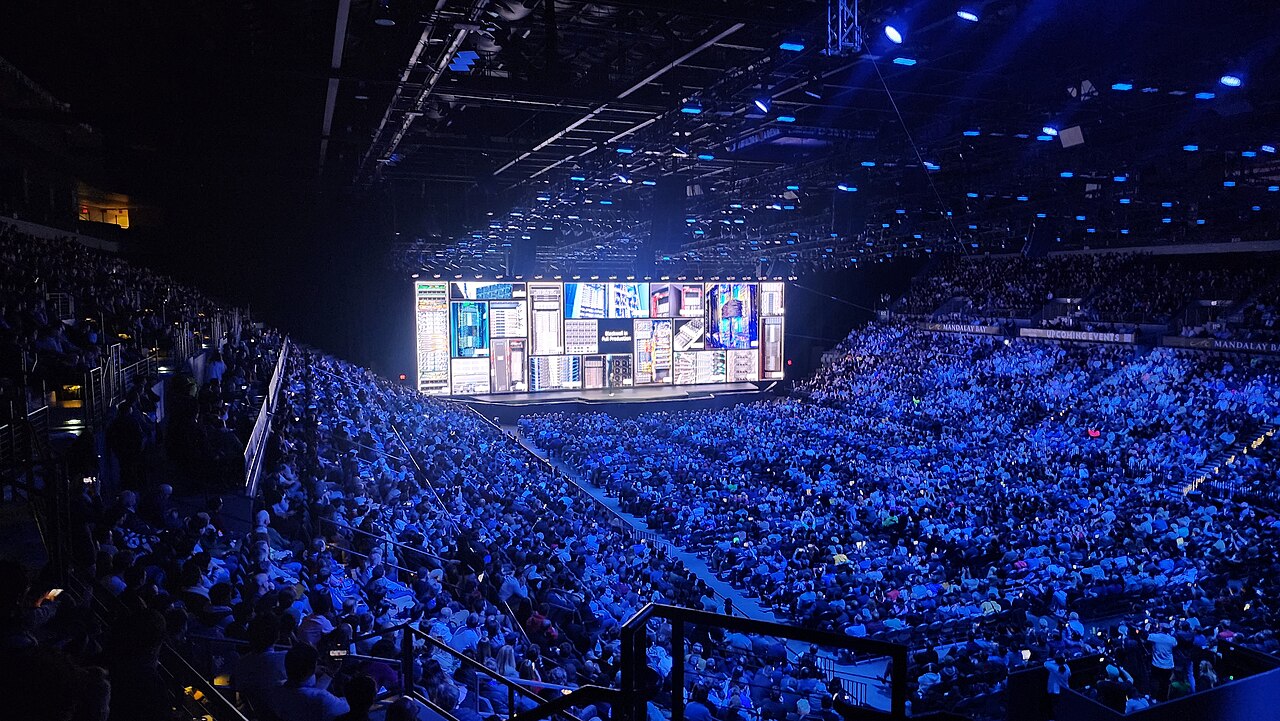
Watch the keynote
Official stream from NVIDIA (official). Open on YouTube · GTC Berlin site
Live updates
Official announcements published alongside the keynote
NVIDIA published several announcements on its blog during the keynote. Google Cloud and NVIDIA announced A5X instances built on Vera Rubin NVL72 systems; NVIDIA says general availability is coming next month with planned expansion to Europe, and that Google Cloud plans to scale to as many as 960,000 Rubin GPUs across multiple sites. NVIDIA cuDSS, a CUDA-X library that moves the large sparse-system solves inside engineering and scientific simulations onto GPUs, is now generally available. For factories, the NVIDIA Factory Operations Blueprint (FOX) is now in early access on GitHub for building factory manager agents and specialist agents for visual inspection, root cause analysis and fleet management. NVIDIA Cloud Partners across Europe, the Nordics, Africa and Central Asia are also building DSX Vera Rubin AI factories for sovereign compute. Stream captions are still not available from YouTube, so this page still has no transcript quotes.
Source: NVIDIA Blog, NVIDIA Blog, NVIDIA Blog, NVIDIA Blog
Keynote recap: AI factories, safe agents, Hyperion cars and a reference humanoid
The keynote has ended. Here is the full picture from NVIDIA’s keynote live blog. Jensen Huang framed AI as a five-layer cake (energy, computers, AI factories, models, applications) and urged Europe to produce AI, not just consume it. For infrastructure, he said Vera Rubin is in full production and announced NVIDIA DSX POD, partner-built Vera Rubin AI factories in modular containers that NVIDIA says can be deployed in 14 days once site utilities are ready. For software, he described an agent as a model, a harness, a sandbox, knowledge and tools, introduced the NVIDIA OpenShell Reference Architecture for Safe AI Agents and the NVIDIA Agent Knowledge Foundation, presented NVIDIA’s open models (Nemotron, Cosmos, GR00T, Alpamayo, Ising, Earth-2), and called CUDA-X libraries “the tools of the trade” for agents. He covered AI-RAN (NVIDIA’s first commercial phone call on T-Mobile’s network with Nokia), AI-enabled adaptive radiotherapy with Siemens Healthineers, and new Hyperion autonomous-driving partners. For robotics learners, the biggest news was Agile ONE SN, a 31-degree-of-freedom reference humanoid built on Isaac GR00T and expected next year, and a demo in which an agent trained Hugging Face’s Microduck robots in Isaac Sim and the cloud before four of them performed on stage. He closed by saying “Everybody can build agents.” Stream captions could not be fetched for this keynote, so every quote on this page comes from NVIDIA’s live blog, not the stream transcript.
Source: NVIDIA Blog, NVIDIA on YouTube
Healthcare, Hyperion cars, the Agile ONE SN humanoid and RTX Spark
According to NVIDIA’s keynote live blog, Huang described AI-enabled adaptive radiation therapy being developed with Siemens Healthineers as a physical-AI application: the system “has to perceive the changing environment, understand where the tumor is, segment it just perfectly and direct the radiotherapy accordingly.” He said the NVIDIA Hyperion computing platform is being designed into more vehicle fleets, with Volvo Cars adopting Hyperion and the NVIDIA Alpamayo stack, and Volkswagen’s van, JLR, Volvo and Mercedes-Benz’s next-generation vehicles Hyperion-compatible. He announced Agile ONE SN, a reference humanoid built on Isaac GR00T with a 31-degree-of-freedom body, expected next year and designed to cut researcher setup time from weeks to days. He then showed RTX Spark laptops (launched last week), comparing their 1 petaflops and 128GB of memory with the DGX-1 he delivered to OpenAI in 2016, and showed an agent training Hugging Face’s Microduck in Isaac Sim before four Microducks joined him on stage. The keynote ended with a Eurovision-style musical send-off.
Source: NVIDIA Blog
DSX POD, safe-agent architecture, open models and CUDA phone calls
According to NVIDIA’s keynote live blog, Jensen Huang said Vera Rubin is in full production and announced NVIDIA DSX POD, a reference design for partner-built Vera Rubin AI factories in modular containers that NVIDIA says can cut onsite deployment from six months to 14 days once site utilities are ready. He described an AI agent as five parts (a model, a harness that orchestrates its work and memory, a sandbox, knowledge and tools) and introduced the NVIDIA OpenShell Reference Architecture for Safe AI Agents, saying “the most important thing is to make sure the agent is secure.” He walked through NVIDIA’s open models, including Cosmos world foundation models and GR00T for humanoid robots, introduced the NVIDIA Agent Knowledge Foundation for connecting agents to company data, and showed agents at Lila Sciences, Siemens Erlangen and Dassault Systèmes. On telecoms, he said NVIDIA made its first commercial phone call on T-Mobile’s network with Nokia: “Now CUDA makes phone calls.” Stream captions were still unavailable, so quotes here come from NVIDIA’s live blog.
Source: NVIDIA Blog
Jensen Huang takes the stage: “the beginnings of a new industrial revolution”
According to NVIDIA’s keynote live blog, Jensen Huang opened by asking what L’Oréal, Revolut, Spotify, Merck, Vodafone, Zara, Porsche, Nestlé and HSBC have in common, and answered that they are all European companies working with NVIDIA on AI. He described AI as a five-layer cake: energy powers advanced computers in an AI factory, which generates tokens from the models running on it, which are then built into every application. He argued that the infrastructure has to exist long before the AI models emerge, just as the internet first needed networking and electricity first needed the grid, and urged Europe to produce AI rather than only consume it. NVIDIA’s blog also notes the company has committed nearly $10 billion to Europe’s technology ecosystem during its week-long tour and works with more than 12,000 partners. No product announcements have been reported yet. Quotes here come from NVIDIA’s live blog; stream captions were still unavailable for this update.
Source: NVIDIA Blog
Keynote window open; Siemens shows AI agents and digital twins at its Erlangen factory
The keynote is scheduled to be under way now (2:30–4:30 PM IST); NVIDIA’s pregame show with Deirdre Bosa and Gavin Baker ran live from the Tempodrom beforehand. Live captions from the stream could not be fetched for this update, so no on-stage quotes or announcements are listed yet. Ahead of the keynote, NVIDIA’s live blog reported that Siemens and NVIDIA toured the Siemens Electronics Factory in Erlangen, where Siemens agents built with the NVIDIA Factory Operations Blueprint recommend options when an urgent order arrives and changes are tested in a digital twin while the real line keeps running; a production controller approves the plan before the agent applies it. Siemens software also uses NVIDIA Cosmos to create a virtual “golden board” and synthetic images of good and defective circuit boards for inspection. Separately, Jensen Huang and German Chancellor Friedrich Merz discussed Germany’s AI roadmap with a focus on industrial AI in manufacturing and automotive.
Source: NVIDIA Blog, NVIDIA Blog, NVIDIA Blog
Live page opened: keynote starts at 2:30 PM IST
NVIDIA lists Jensen Huang’s GTC Berlin keynote for Wednesday 21 October, 11 a.m.–1 p.m. CEST (2:30–4:30 PM IST) at the Tempodrom in Berlin. NVIDIA’s pregame show with partners starts at 9 a.m. CEST (12:30 PM IST). Watching online is free with no registration. Nothing has been announced on stage yet; this page will be updated in chunks while the keynote runs.
Source: NVIDIA, NVIDIA, NVIDIA Blog
GTC Berlin opened with developer workshops
NVIDIA’s live blog says GTC Berlin began on Tuesday 20 October with full-day developer workshops on AI agents, inference, accelerated networking and robotics. NVIDIA says the conference has over 100 sessions.
Source: NVIDIA Blog
What’s new: announcements
Google Cloud A5X instances on Vera Rubin NVL72
Google Cloud A5X instances combine NVIDIA Vera Rubin NVL72, ConnectX-9 SuperNICs, Google’s Virgo Network and liquid cooling for agentic inference and large-scale reinforcement learning. NVIDIA says general availability is coming next month, with planned expansion to Europe, and that Google Cloud plans to scale to as many as 960,000 Rubin GPUs across multiple sites.
Source: NVIDIA Blog
NVIDIA cuDSS generally available
A CUDA-X library that accelerates solving large sparse systems, the math-heavy step that repeats throughout engineering and scientific simulations, by running it on GPUs.
Source: NVIDIA Blog
NVIDIA Factory Operations Blueprint (FOX) in early access
Available in early access on GitHub for building always-on factory manager agents that coordinate work across machines, plus specialist agents for visual inspection, root cause analysis, report generation and fleet management. The agents can connect to Cosmos and Nemotron models and to CAD, product lifecycle and simulation data.
Source: NVIDIA Blog
Agile ONE SN reference humanoid
A reference humanoid built on Isaac GR00T with a 31-degree-of-freedom body, expected to be available next year and designed to cut researcher setup time from weeks to days. It is modular and builds on NVIDIA’s open physical AI stack: Isaac Capture for data collection, GR00T models, Isaac Lab for simulation-based training and Isaac OS for runtime. NVIDIA says Agility Robotics, Figure, KUKA and NEURA Robotics already build on the same platform.
Source: NVIDIA Blog
More vehicles on NVIDIA Hyperion
Volvo Cars is adopting Hyperion and the NVIDIA Alpamayo stack for automated driving. Huang said Volkswagen’s van, JLR, Volvo and Mercedes-Benz’s next-generation vehicles will be Hyperion-compatible, and Bolt with Lucid, Mercedes-Benz, Volkswagen Commercial Vehicles and Einride are showcasing level 3 and level 4 use cases.
Source: NVIDIA Blog
AI-enabled adaptive radiotherapy with Siemens Healthineers
Nemotron agents coordinate treatment planning, Isaac for Healthcare and Omniverse libraries build a digital twin of the device and patient anatomy, and Holoscan with IGX Thor feeds live imaging so delivery can adapt as the patient moves.
Source: NVIDIA Blog
NVIDIA DSX POD
A reference design for complete NVIDIA Vera Rubin AI factories built by partners inside modular containers, integrated and validated before delivery. NVIDIA says onsite deployment can shrink from six months to 14 days once site utilities are ready, and that its DSX AI Factory Platform can cut cooling water use by up to 100% and deliver the same AI output with up to 30% less power.
Source: NVIDIA Blog
NVIDIA OpenShell Reference Architecture for Safe AI Agents
A full-stack design built on NVIDIA OpenShell, which NVIDIA describes as an open source, policy-controlled runtime with kernel-level sandboxing that sits between an agent and the systems it can affect. Huang said an agent’s privileges should be minimal, monitored, and adapted each time it is launched.
Source: NVIDIA Blog
NVIDIA Agent Knowledge Foundation
A set of models and libraries for connecting agents to enterprise data, both documents and databases, including Nemotron tools for parsing, embedding and reranking, and new NVIDIA Kumo models for predictions from structured data.
Source: NVIDIA Blog
Open model families highlighted
Huang presented NVIDIA’s open models as starting points to post-train on your own data: Nemotron (language), Cosmos (world foundation models), GR00T (humanoid robotics), Alpamayo (autonomous vehicles), Ising (quantum-classical computing) and Earth-2 (physics AI).
Source: NVIDIA Blog
First commercial AI-RAN phone call
Huang said NVIDIA made its first commercial phone call on T-Mobile’s network with Nokia after nearly eight years of work, part of turning cell sites into distributed AI infrastructure.
Source: NVIDIA Blog
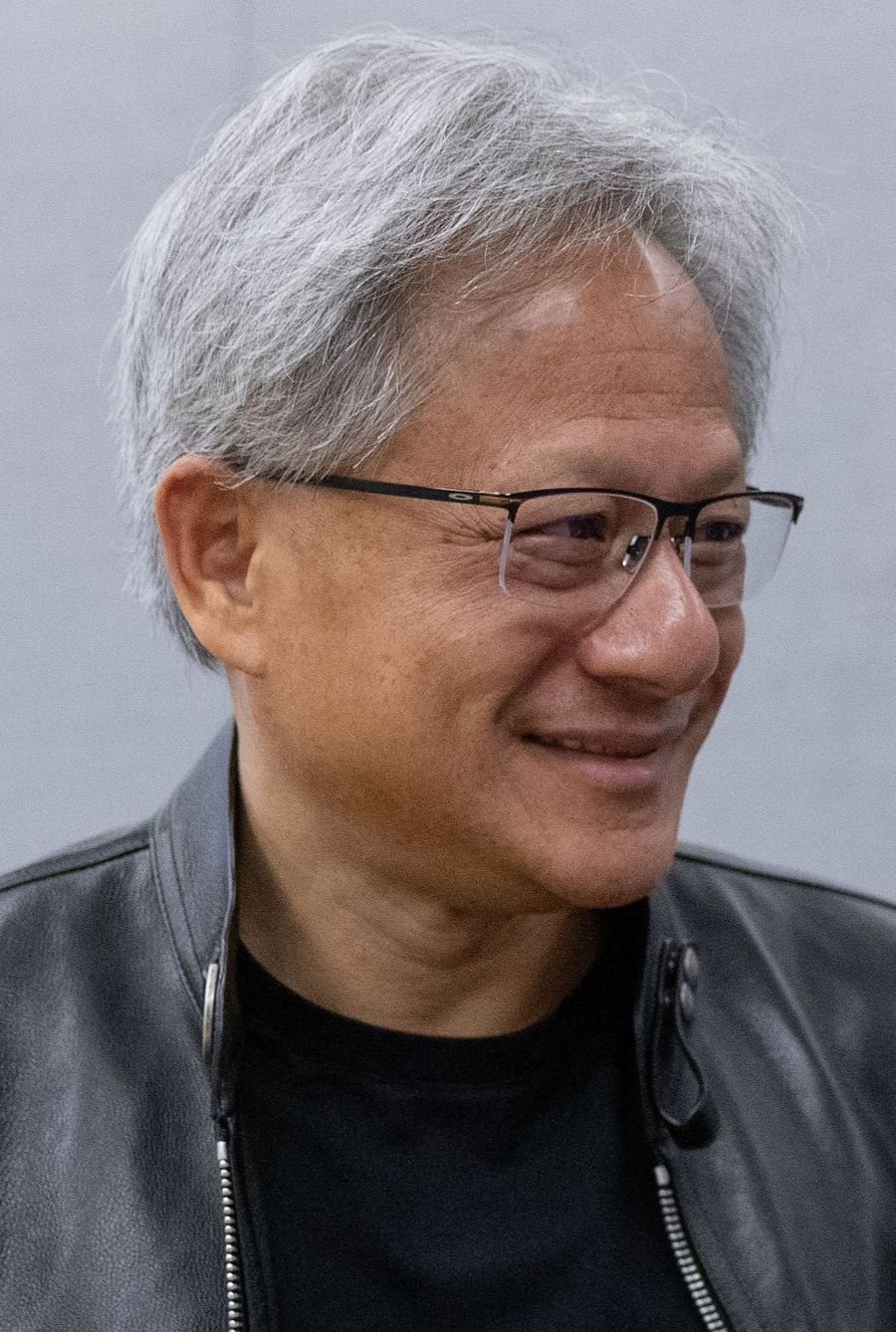
What Jensen is saying
Quotes are taken word for word from the official stream, with the time in the recording.
Nothing confirmed yet in this section.
His predictions and thinking
These are Jensen Huang’s own claims and forecasts as stated on stage, not verified facts.
Jensen’s claim
“Every company in Europe will become an AI company”
Jensen Huang’s closing claim, as reported by NVIDIA’s live blog: “Everybody can build agents. Every company in Europe will become an AI company.” He also called physical AI the next frontier. These are his predictions, not measured results.
Source: NVIDIA Blog
Jensen’s claim
Open models plus your own data can reach “super intelligence”
Jensen Huang’s claim, as reported by NVIDIA’s live blog: start from an open model like Nemotron, post-train it on your own data, and “achieve, of course, super intelligence,” adding that “all the technology exists today.” This is his prediction, not a measured result.
Source: NVIDIA Blog
Jensen’s claim
DSX POD will transform how data centres are built
Huang called modular, pre-validated AI factories “a complete transformation of the world supply chain” that “will change the way that people install and build data centers.” The 14-day deployment figure is NVIDIA’s own claim.
Source: NVIDIA Blog
Jensen’s claim
AI marks the start of a new industrial revolution
Jensen Huang’s framing, as reported by NVIDIA’s live blog: “After decades of advancement in the computer industry, we are now at the beginnings of a new industrial revolution.” He added that Europe should be “producing the AI”, not just consuming it. This is his prediction and pitch, not a measured result.
Source: NVIDIA Blog
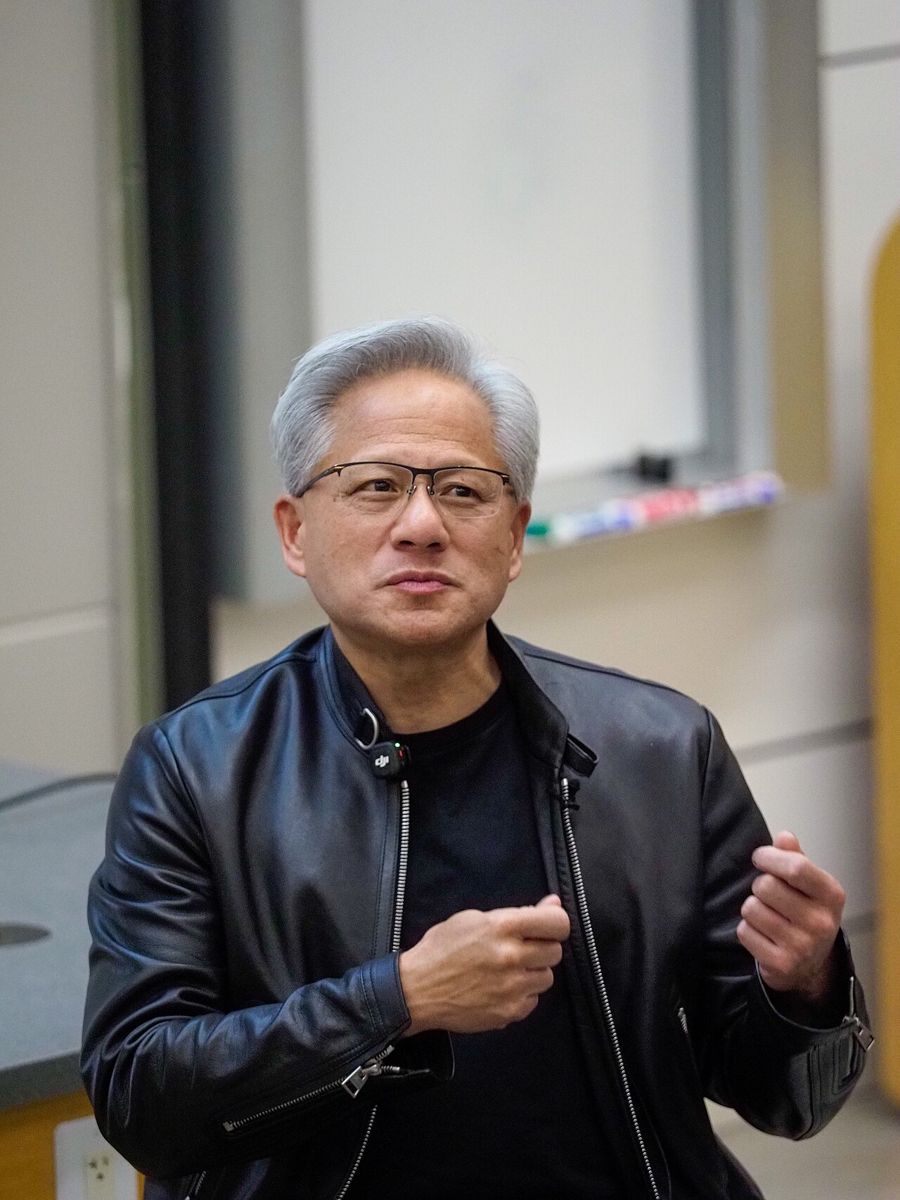
What this means for robotics and Physical AI learners
The robotics workflow on stage was simulate, train, then deploy: the Microduck robots were simulated in Isaac Sim, trained in the cloud, evaluated locally and only then run on real hardware. That is the same sim-to-real loop these lessons teach.
Agile ONE SN is a 31-degree-of-freedom humanoid. Every one of those joints is the same kinematics and control problem you practise on a 6DOF arm, just multiplied.
Whatever is announced, the skills underneath stay the same: simulation and digital twins, ROS 2, computer vision and reinforcement learning. The lessons below are free and teach those foundations.
- What Is a Digital Twin? →Stage 12 · the idea behind simulating factories and robots before building them
- Why Robots Need Simulation →Stage 12 · why robots are trained and tested in simulators first
- Simulation vs Reality →Stage 0 · the “sim-to-real” gap in plain words
- Classical vs AI Vision →Stage 11 · how neural networks changed robot perception
- Why Robots Need ROS 2 →Stage 10 · the software framework most robot stacks plug into
- From Perception to Robot Action →Stage 13 · the perceive-then-act loop Huang described for adaptive radiotherapy
- States, Actions & Rewards →Stage 14 · the basics behind training robots like the Microducks in simulation
- Advanced Robotics & Reinforcement Learning →Stage 14 · how robots learn behaviours by trial and error
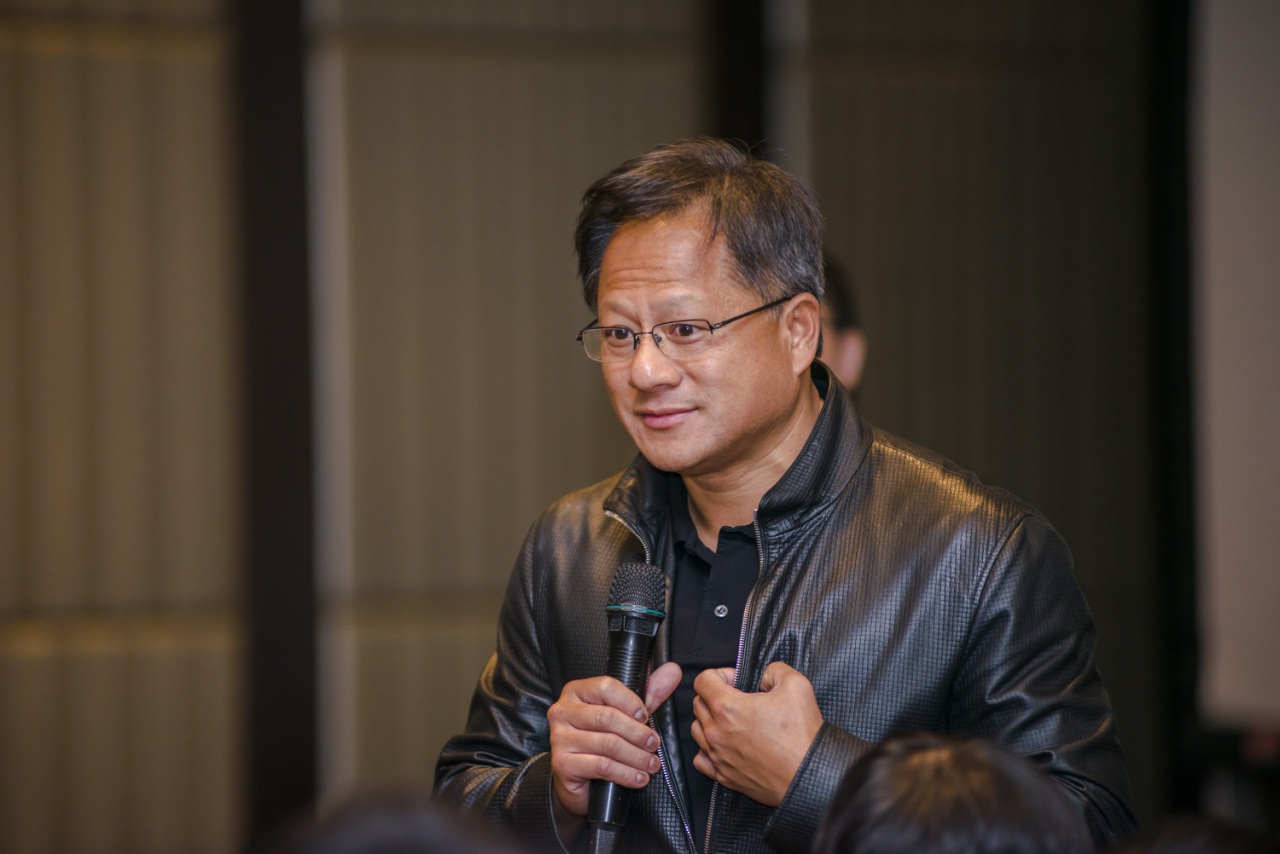
Sources
- GTC Berlin 2026 Keynote [SB61112], session catalog · NVIDIA
- FAQs about NVIDIA GTC Berlin 2026 · NVIDIA
- NVIDIA Lands in Europe for GTC Berlin (live blog) · NVIDIA Blog
- Siemens and NVIDIA Put Industrial AI to Work in Erlangen (GTC Berlin live blog) · NVIDIA Blog
- Germany Wants to Lead the World in Industrial AI: How NVIDIA Will Help · NVIDIA Blog
- GTC Berlin 2026: Live Updates From NVIDIA CEO Jensen Huang’s Keynote · NVIDIA Blog
- Google Cloud and NVIDIA Announce General Availability of NVIDIA Vera Rubin Infrastructure · NVIDIA Blog
- NVIDIA cuDSS Now Generally Available to Accelerate Engineering and Scientific Simulations · NVIDIA Blog
- Europe’s Industrial Leaders Reinvent Engineering and Manufacturing With NVIDIA · NVIDIA Blog
- NVIDIA Cloud Partners Scale Across Europe — Sovereign, Open and Built for Safe AI Agents · NVIDIA Blog
- NVIDIA GTC Berlin 2026 Keynote With CEO Jensen Huang (official stream) · NVIDIA on YouTube
Published by AIHUB Robotics Lab. Photos are archive images from Wikimedia Commons under the licences shown; they are not from this event.
← All Newsroom articles