
Robotics Fundamentals · Lesson 12
Robot Platforms Compared
Est. 50–65 min
Why
Why the right platform matters more than the coolest one
Every robot shares the five layers from Lesson 1, but the body plan — the platform — changes everything: what it can reach, how it moves, how much it costs, how dangerous it is and how hard it is to control. OSHA groups industrial robots by structure (articulated, SCARA, Cartesian, parallel) and by how they work with people (collaborative and non-collaborative), and adds industrial mobile robots that navigate autonomously. This chapter compares platforms honestly, so you choose with numbers and reasons, not hype.
By the end you will be able to: describe the main platforms — articulated arms, SCARA, Cartesian gantries, parallel robots, wheeled mobile robots, drones, legged and humanoid robots; say what each is good and bad at, using DOF, workspace, payload and safety; explain collaborative vs non-collaborative robots and the four collaborative methods OSHA lists; read a real platform’s spec sheet (TurtleBot3 Burger); and build a weighted decision matrix to choose your own platform.
Concept
Robot platforms in plain words: same layers, different bodies
Think of vehicles in an Indian city. A cycle, an auto-rickshaw, a tempo, a bus and a metro all move people and goods, but nobody uses a bus to deliver one parcel through a narrow galli, and nobody uses a cycle to move 60 passengers. Each vehicle is a *platform* designed for a job. Robots are the same: pick the platform for the job, not the other way round.
The platform family
| Platform | Typical joints / motion | Strengths | Weaknesses | Typical jobs |
|---|---|---|---|---|
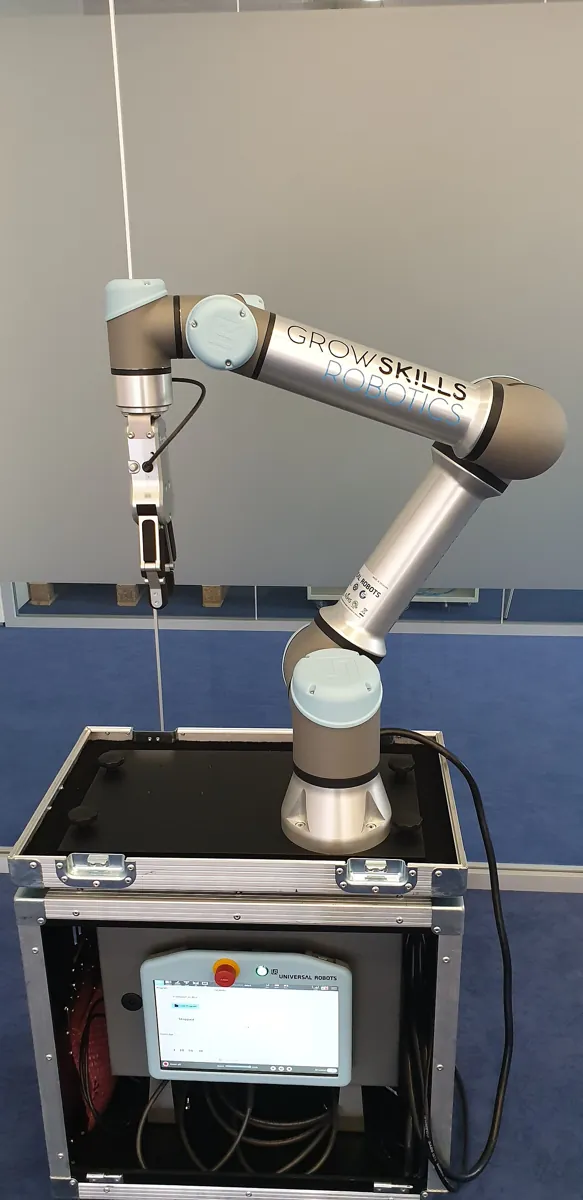
| Articulated arm | At least 3 rotary joints (often 6) | Large, flexible workspace; any orientation with 6 DOF | Torque at full reach; complex kinematics | Welding, painting, handling, your 6DOF arm |
| SCARA | RRPR, 4 DOF | Fast, compliant in XY, rigid in Z | Planar work only | Assembly, pick-and-place |
| Cartesian / gantry | PPP | Simple maths, rigid, heavy loads | Frame bigger than its workspace | 3D printing, plotting, CNC, palletising |
| Parallel (delta, Stewart) | Several chains to one tool | Very fast, stiff | Small workspace | High-speed picking, motion simulators |
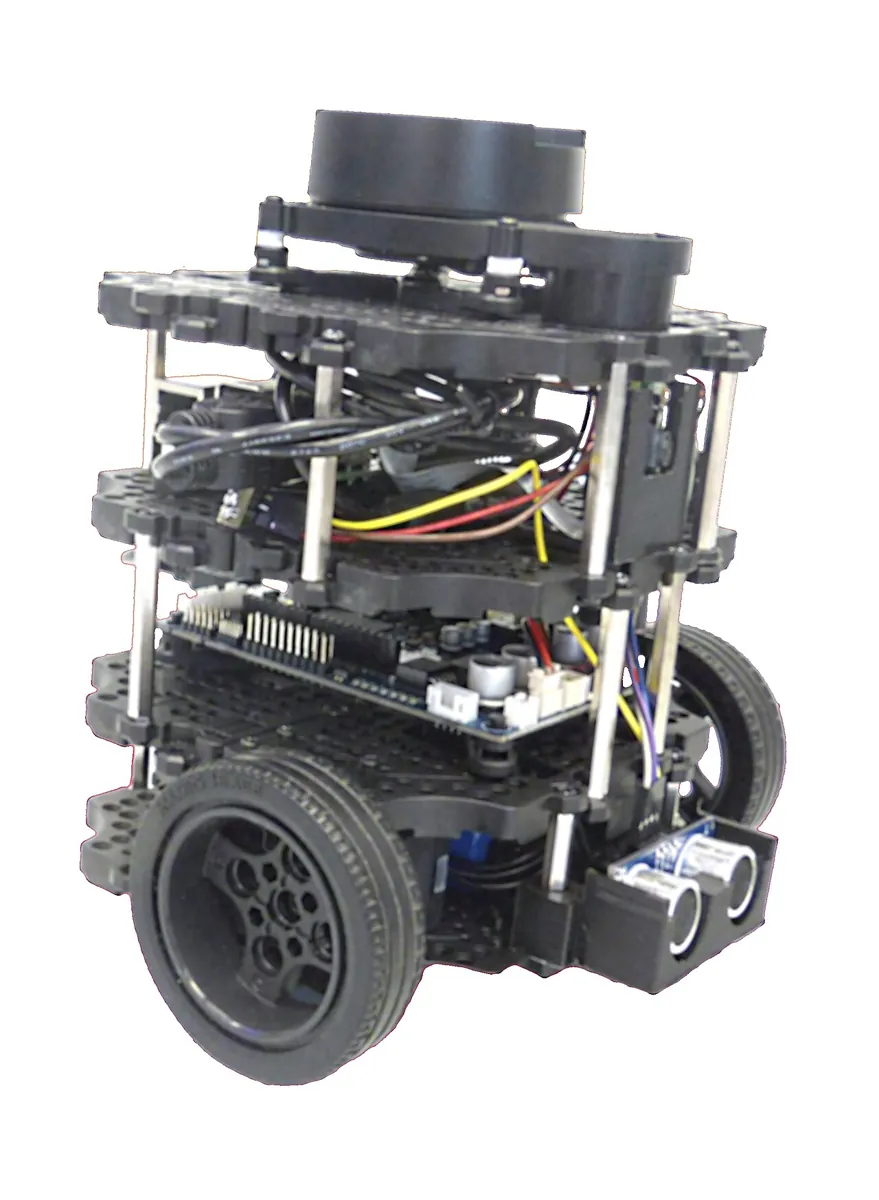
| Wheeled mobile robot | Two driven wheels (diff-drive) or more | Cheap, efficient on flat floors | Stairs and rough ground | Delivery, warehouses, cleaning, research |
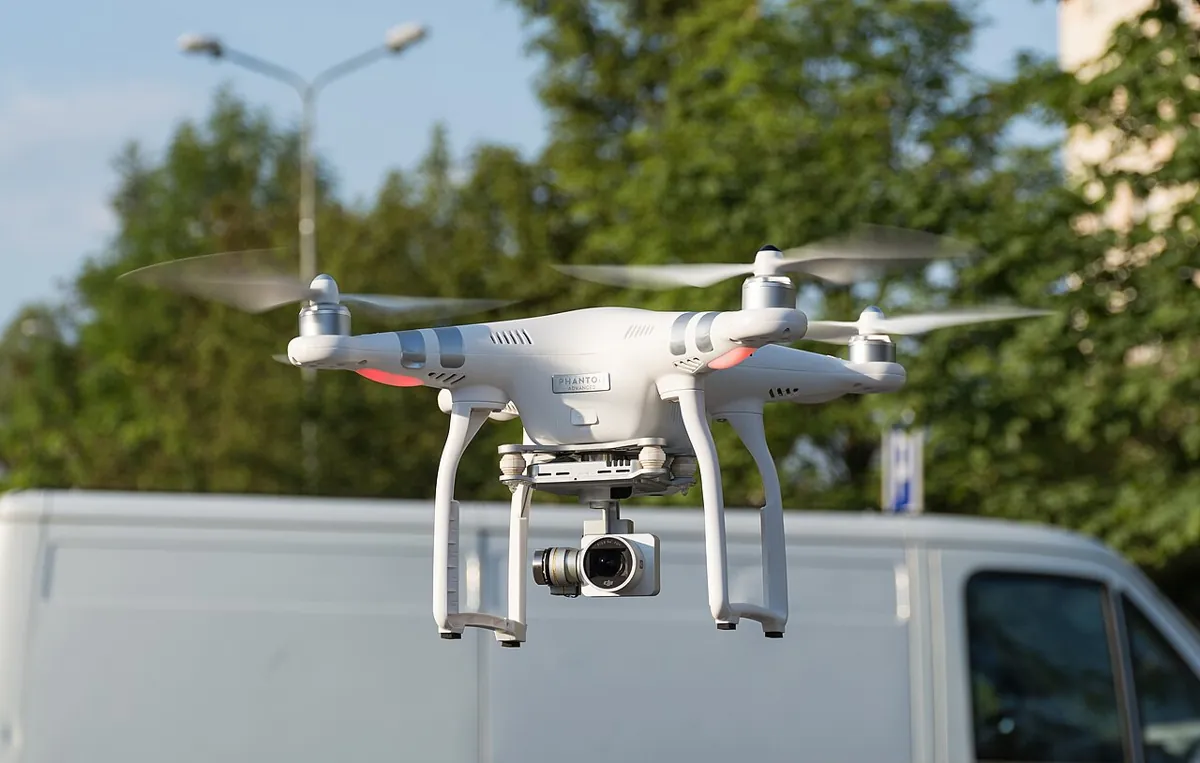
| Drone (multirotor) | Four or more propellers | Goes anywhere in the air | Short flight time, payload, safety | Inspection, mapping, photography |
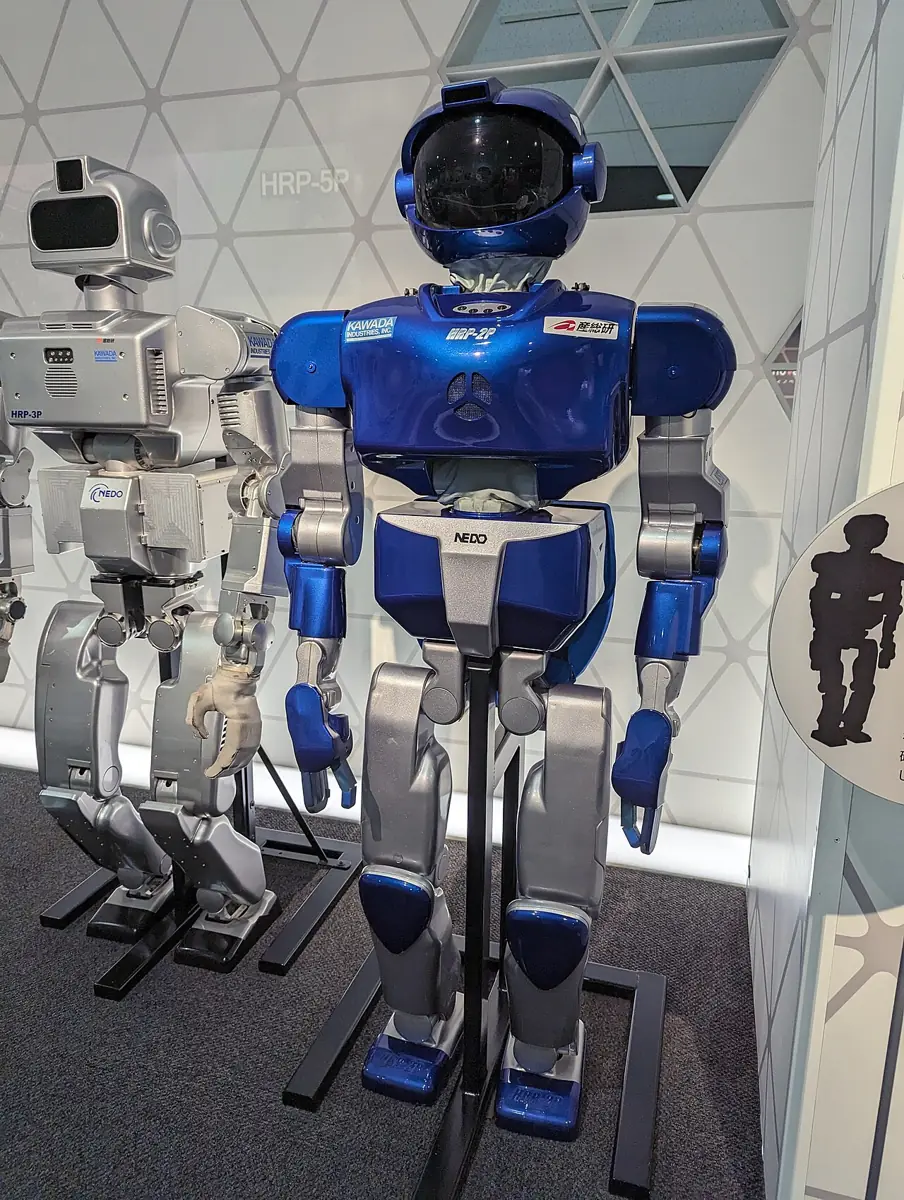
| Legged / humanoid | Many joints per leg | Rough terrain, human spaces | Expensive, complex, balance and power | Research, demonstrations |
OSHA’s own descriptions match: articulated robots have at least three rotary joints; SCARA robots have two parallel rotary joints that are compliant in the XY plane and rigid in Z, typically used in assembly; Cartesian (linear, XYZ or gantry) robots have a rigid structure for heavy loads, plotting and 3D printing; and parallel robots connect several separately controlled chains to one tool for very high-speed pick and place.
Collaborative or not?
OSHA separates non-collaborative applications (robots behind traditional machine safeguarding, such as fences) from collaborative applications designed for direct interaction with workers. A collaborative application uses one or more of four methods:
| Method | Idea |
|---|---|
| Speed and separation monitoring (SSM) | Sensors detect a person; the robot slows or stops, and resumes when the area is clear |
| Hand-guided controls (HGC) | A worker directly guides the robot’s motion, and the robot does the heavy lifting |
| Power and force limiting (PFL) | Contact is permitted because forces are limited — by inherently safe design (low payload or speed) or by sensors and safety logic |
| Safety-rated monitored stop (SMS) | Used with the others: the robot holds still, powered, while a person is in the space |
Choosing with a decision matrix
score = Σ (weightᵢ × ratingᵢ) ÷ Σ weightᵢ
- List your criteria (cost, safety on a desk, learning value, fit with your next project, build time), give each a weight, rate each platform 1–5 on each, and compute. The numbers are your judgement — the matrix just makes the judgement visible and arguable.
Visual
Visualise it: compare platforms side by side
Flip through the platform cards. For each one, find its **DOF**, its **workspace shape**, a job it is great at and one it is bad at.
Interactive · Robot platform cards
Deeper than Stage 0 type names — pick a platform and weigh strengths vs costs before Stage 6.
Manipulator / arm
Fixed base, high dexterity in a workcell.
Strengths
- +Precise tool poses
- +Repeatable pick/place
- +Clear kinematics story
Costs / risks
- −Limited workspace
- −Power & payload care
- −Singularities / collisions
Bridge · Direct prep for Stage 6 6DOF arm.
Code lab
Code lab: a weighted decision matrix
The script rates five platforms on five criteria (the ratings are an example judgement — edit them), ranks them with your weights, ranks them again with weights for someone not planning the 6DOF arm, and prints real reference numbers for the TurtleBot3 Burger. Run it with python3 platform_matrix.py.
"""platform_matrix.py - a weighted decision matrix for your first robot platform.
Scores 1-5 are YOUR judgement (edit them). Weights say what matters to you."""

CRITERIA = {"cost": 3, "safety_on_desk": 3, "learning_value": 2, "fits_6dof_path": 2, "build_time": 1}
PLATFORMS = {
    "Desktop servo arm (4-6 DOF)": {"cost": 4, "safety_on_desk": 4, "learning_value": 5, "fits_6dof_path": 5, "build_time": 3},
    "Two-wheel diff-drive rover": {"cost": 5, "safety_on_desk": 4, "learning_value": 4, "fits_6dof_path": 2, "build_time": 4},
    "Cartesian gantry / pen plotter": {"cost": 3, "safety_on_desk": 4, "learning_value": 3, "fits_6dof_path": 3, "build_time": 3},
    "Quadcopter drone": {"cost": 2, "safety_on_desk": 1, "learning_value": 4, "fits_6dof_path": 1, "build_time": 2},
    "Small humanoid / biped": {"cost": 1, "safety_on_desk": 3, "learning_value": 4, "fits_6dof_path": 3, "build_time": 1},
}

def rank(weights):
    total_w = sum(weights.values())
    scored = {p: sum(s[c] * w for c, w in weights.items()) / total_w for p, s in PLATFORMS.items()}
    return sorted(scored.items(), key=lambda kv: -kv[1])

print("== Ranking with your weights ==", CRITERIA)
for i, (p, s) in enumerate(rank(CRITERIA), 1):
    print(f"{i}. {p:32s} {s:.2f} / 5")

alt = dict(CRITERIA, fits_6dof_path=0, learning_value=3)
print("\n== If you do not plan to build the 6DOF arm ==", alt)
for i, (p, s) in enumerate(rank(alt), 1):
    print(f"{i}. {p:32s} {s:.2f} / 5")

print("\n== Reference platform numbers (TurtleBot3 Burger, ROBOTIS e-manual) ==")
for k, v in {"max speed": "0.22 m/s", "max rotation": "2.84 rad/s", "payload": "15 kg", "weight": "1 kg", "computer": "Raspberry Pi 4 + OpenCR (Cortex-M7)", "wheel actuators": "2 x XL430-W250", "range sensor": "360 deg LDS-02"}.items():
    print(f"  {k:16s} {v}")
Output (run with python3 platform_matrix.py)
== Ranking with your weights == {'cost': 3, 'safety_on_desk': 3, 'learning_value': 2, 'fits_6dof_path': 2, 'build_time': 1}
1. Desktop servo arm (4-6 DOF)      4.27 / 5
2. Two-wheel diff-drive rover       3.91 / 5
3. Cartesian gantry / pen plotter   3.27 / 5
4. Small humanoid / biped           2.45 / 5
5. Quadcopter drone                 1.91 / 5

== If you do not plan to build the 6DOF arm == {'cost': 3, 'safety_on_desk': 3, 'learning_value': 3, 'fits_6dof_path': 0, 'build_time': 1}
1. Two-wheel diff-drive rover       4.30 / 5
2. Desktop servo arm (4-6 DOF)      4.20 / 5
3. Cartesian gantry / pen plotter   3.30 / 5
4. Small humanoid / biped           2.50 / 5
5. Quadcopter drone                 2.30 / 5

== Reference platform numbers (TurtleBot3 Burger, ROBOTIS e-manual) ==
  max speed        0.22 m/s
  max rotation     2.84 rad/s
  payload          15 kg
  weight           1 kg
  computer         Raspberry Pi 4 + OpenCR (Cortex-M7)
  wheel actuators  2 x XL430-W250
range sensor 360 deg LDS-02Try it: drive a two-wheel robot by setting each wheel’s speed. Equal speeds go straight; different speeds turn — the simplest mobile platform to control.
Interactive · Differential-drive steering
Motion
Curving left
Forward speed v
15.0 cm/s
Turn rate ω
0.667 rad/s
Turn radius R
22.5 cm
Like a tank or many robot vacuums: no steering wheel, just two motors. Speeds in cm/s; ω in rad/s (positive = turning left / anticlockwise). Ideal model: no wheel slip.
Real world
Platforms at work
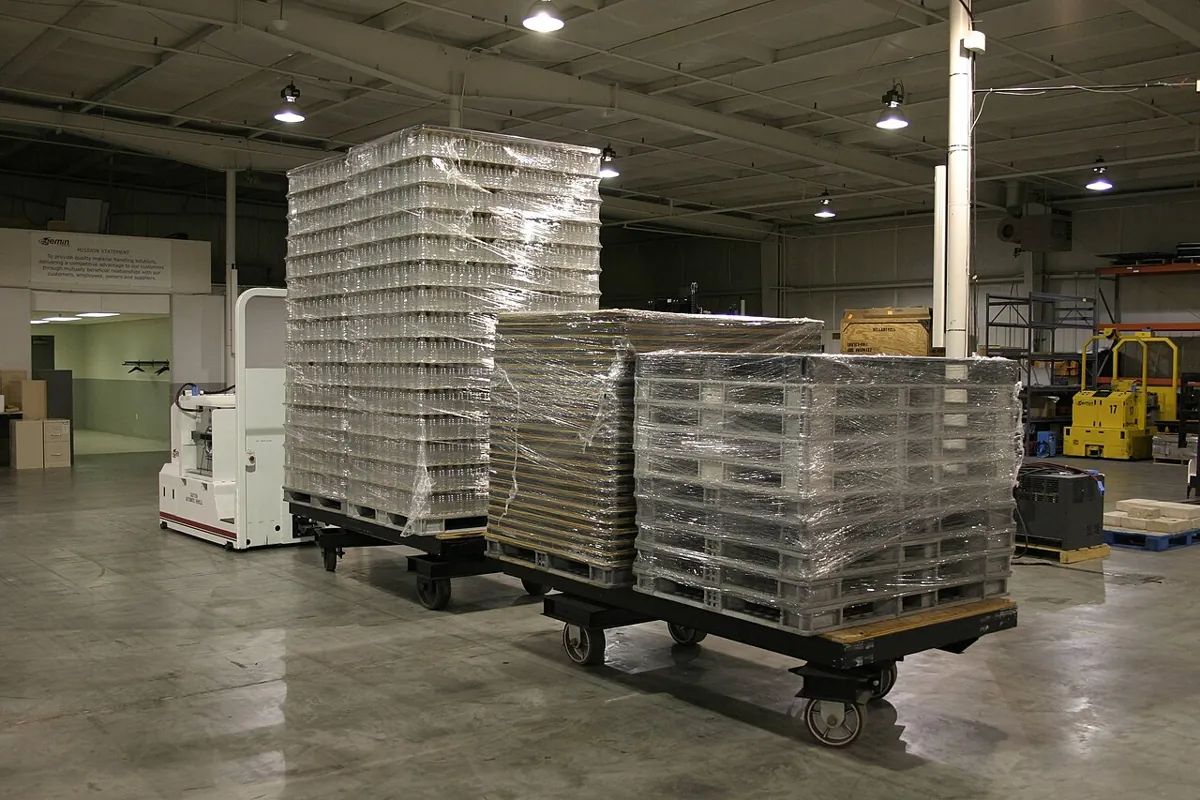
- Warehouses: tugger AGVs and mobile robots move goods; OSHA notes industrial mobile robots navigate autonomously and avoid obstacles.
- Factories: articulated arms weld and handle, SCARA robots assemble, gantries palletise.
- Labs and classrooms: wheeled research platforms like the TurtleBot3; desktop arms.
- Inspection and mapping: drones photograph roofs, towers and fields.
- Research and science centres: humanoids and legged robots explore human-like motion.
Bench build
Bench build: a platform audit
Pick one real robot or robotic toy you can handle (a robot vacuum, a toy car, an RC drone with props removed, a kit arm, your Stage 4 bench) and audit it like an engineer.
Classify
Which platform family is it? Write its joint string (Lesson 3) or wheel layout.
Measure
Weigh it, measure its size, time a battery charge if you can, and measure top speed with a ruler and a phone stopwatch.
Find the layers
List its actuators, sensors, controller and safety features.
Workspace
Where can it go or reach? Sketch it (a ring for an arm, a floor area for a rover).
Hazards
What could hurt someone? Pinch points, props, wheels, hot parts, falling.
Compare
Put your measurements next to the TurtleBot3 Burger’s published specs. What is better, what is worse?
Debugging
Debugging platform choices
| Problem | Likely cause | Better choice |
|---|---|---|
| Robot can’t reach the task | Wrong workspace shape | Arm for a shell around a point; gantry for a flat rectangle; rover to go to the task |
| Battery dies in minutes | Platform too power-hungry (drone, humanoid) | Wheeled or fixed-base platform; bigger battery; tethered power for a desk arm |
| Project stalls at calibration | Too many joints for a first build | Fewer DOF; add joints after the first version works |
| Robot is unsafe on a shared desk | High speed or energy near people | Slow, light platform; limits and e-stop (Lesson 13) |
| Can’t find help or parts | Rare platform | Choose a common, documented platform (e.g. a ROS-supported rover or a standard servo arm) |
Think
Think about it
Think
A school wants one robot platform for 40 students learning robotics for a year, with a budget for about ten robots, shared desks and no workshop. Arjun votes for humanoids (“students love them”). Meera votes for wheeled rovers. What questions would you ask, and what would you recommend?
Experiment
Try it in the lab: choose a platform with a decision matrix
Thirty minutes with the platform cards, the diff-drive lab and the decision-matrix script.
Experiment
Choose a platform with a decision matrix
You will need
- Robot platform cards (below, runs in your browser)
- Notebook
- Optional: `platform_matrix.py`; a robot or toy to audit
Steps
- Go through the platform cards. For each, write DOF, workspace shape, one great job and one bad job.
- Run `platform_matrix.py` as it is. Then change the weights to match *your* priorities and run again.
- Change two ratings you disagree with. Does the winner change?
- In the diff-drive lab, drive a square. Write the wheel speeds you used for straight lines and for turns.
- Write a three-sentence recommendation for your own first platform, quoting your matrix score.
Interactive · Robot platform cards
Deeper than Stage 0 type names — pick a platform and weigh strengths vs costs before Stage 6.
Manipulator / arm
Fixed base, high dexterity in a workcell.
Strengths
- +Precise tool poses
- +Repeatable pick/place
- +Clear kinematics story
Costs / risks
- −Limited workspace
- −Power & payload care
- −Singularities / collisions
Bridge · Direct prep for Stage 6 6DOF arm.
There is no best robot — only the best robot for a job. Platforms differ in workspace, payload, safety, cost and complexity, and a weighted matrix makes your reasons visible.
Knowledge check
Check your understanding
Knowledge check
1. OSHA describes articulated robots as robots with…
2. A SCARA robot is compliant (flexible) in which direction?
3. Cartesian (gantry) robots are commonly used for…
4. A collaborative application, in OSHA’s sense, is designed for…
5. In power and force limiting (PFL), contact with a person is…
6. The TurtleBot3 Burger’s published maximum speed is…
7. Why do drones usually score low as a first desk robot?
8. In a weighted decision matrix, changing the weights…
9. Industrial mobile robots (IMRs), according to OSHA, …
Mini assignment
Hands-on assignment
Mini assignment
Platform recommendation report
Choose a robot platform for a real job you care about (your first build, a school club, a family business task) and justify it with a decision matrix, a spec comparison and a hazard list.
Deliverables
- A one-paragraph job description: what the robot must do, where, how often and near whom.
- Your edited `platform_matrix.py` with your own criteria, weights and ratings, and its output.
- A spec comparison table of your top two platforms (size, mass, speed or reach, payload, run time, price) with sources.
- A hazard list for the winner and how you would reduce each hazard.
Do this, step by step
- Write one paragraph describing the job: what the robot must do, where, how often and near whom.
- List four to six criteria (cost, payload, terrain, safety near people, run time…) and give each a weight.
- Rate at least three platforms on each criterion in
platform_matrix.py, run it and read the ranking. - Make a spec table for your top two platforms (size, mass, speed or reach, payload, run time, price) with a source link for each number.
- Write a hazard list for the winner and one way to reduce each hazard.
Stuck? Hints, one at a time
- Hint 1: Start from the job’s workspace: does the robot go to the task (mobile) or does the task come to it (fixed arm or gantry)?
- Hint 2: Pick 4–6 criteria. More than that and the matrix becomes noise.
- Hint 3: Use real numbers where you can (spec sheets) and say where you guessed.
- Hint 4: For hazards, think pinch, crush, cut, fall, fire (batteries) and electrical.
Challenges (pick by level)
- 🟢 Easy: Match each platform to one job: SCARA, gantry, drone, rover, humanoid.
- 🟢 Easy: From the TurtleBot3 spec, convert 2.84 rad/s into degrees per second.
- 🟡 Medium: Add a sensitivity check to the script: change each weight by ±1 and report whether the winner changes.
- 🟡 Medium: Write the five layers (Lesson 1) for a tugger AGV.
- 🟠 Hard-ish: Compare a desktop arm and a gantry for sorting coloured blocks on a 30 × 30 cm area. Which has the better workspace fit, and why?
- 🔴 Hard: Read OSHA’s collaborative section and design a small collaborative desk application using PFL by inherently safe design. List the speed and payload limits you would set.
- ⚫ Expert: Build a mobile manipulator concept: a rover carrying a small arm. Compute the new payload budget, the effect on rover speed, and which collaborative method (if any) would apply.
Next step
Whatever platform you choose, it must be safe. In Lesson 13 — Safety, Limits & Operating Envelope you set joint limits, speed limits, keep-out zones, watchdogs and a real latched emergency stop.
Look back: Lesson 11: End Effectors & Tooling. Next: Lesson 13: Safety, Limits & Operating Envelope. Related: Stage 10 — ROS 2 and Stage 12 — Simulation.
Sources
- OSHA Technical Manual, Section IV Chapter 4 — robot structures (articulated, SCARA, Cartesian, parallel); collaborative vs non-collaborative applications; SSM, HGC, PFL (inherently safe design or control means) and SMS; industrial mobile robots navigate autonomously and avoid obstacles.
- ROBOTIS e-Manual: TurtleBot3 Features — Burger specifications: 0.22 m/s, 2.84 rad/s, 15 kg payload, 138 × 178 × 192 mm, 1 kg, 2 h 30 min operating time, Raspberry Pi 4, OpenCR (Cortex-M7), XL430-W250, LDS-02.
- Modern Robotics — K. M. Lynch & F. C. Park (preprint PDF) — open vs closed chains; Stewart platform as a parallel mechanism; workspace depends on structure.
- Photos: Wikimedia Commons (credits under each image).
Self-attested for now — keep artifacts in your lab notebook.
Complete
Today's goal
0 of 1 done today
Mark this lesson complete when you have worked the experiment, knowledge check, and assignment (even roughly).